 7450012800 / 033 24532800
 7450022800 / 7450062800
 medilink24x7@gmail.com
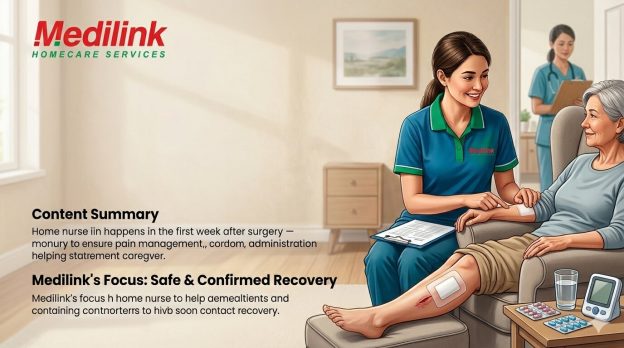
Content Summary
The first week after surgery is the most critical period of recovery. Pain, wound care, medication schedules, and physical limitations all need careful attention. This article covers what families should expect during post-surgery recovery at home, the most common complications that arise, and how professional home care helps patients heal safely and comfortably.
The Week Nobody Warns You About
Most patients leave the hospital within a day or two of surgery. The procedure is done, the surgeon is satisfied, and discharge papers are handed over with a list of instructions. It feels like the hard part is over.
But for many patients and their families, the real challenge begins at home. The hospital environment — with nurses checking in regularly, equipment on hand, and doctors nearby — is replaced by a quieter, more uncertain situation. Pain that was managed by IV medication now needs to be handled with tablets. A wound that was dressed by trained hands now falls to a family member who may have never done it before.
The first seven days after surgery are medically the most significant. Most post-operative complications — wound infections, blood clots, respiratory issues, medication reactions — show up during this window. How well this week is managed has a direct effect on how fast and fully a patient recovers.
Understanding what this period actually involves helps families prepare better. And knowing when professional support is needed makes a real difference.
What the Body Goes Through After Surgery
Surgery, regardless of its type, puts the body under significant physical stress. The moment the procedure ends, the healing process begins — and it is not linear. There are good hours and difficult ones, sometimes within the same day.
Pain is the most immediate concern. It typically peaks in the first 48 to 72 hours and then gradually eases. Managing it properly during this window is important not just for comfort but for recovery. Uncontrolled pain discourages movement, and restricted movement increases the risk of complications like deep vein thrombosis or pneumonia.
Fatigue is another constant presence. Even patients who feel mentally alert are often exhausted by basic activities like walking to the bathroom or sitting upright for a meal. This is normal. The body is directing most of its energy toward tissue repair and immune response. Pushing through this fatigue without guidance can set recovery back.
Appetite tends to drop significantly in the first few days, particularly after abdominal or digestive surgeries. Nutrition still matters — it directly supports wound healing and immunity. Small, easily digestible meals at regular intervals are far better than forcing a full plate that the patient cannot manage.
Common Types of Surgery and What Recovery Looks Like
Post-surgery needs vary depending on the procedure, but certain patterns repeat across most types.
Orthopaedic surgery — hip replacements, knee replacements, fracture repairs — requires careful movement support. Patients are often partially or fully weight-bearing restricted. Falls during this period can undo the surgery entirely. Physiotherapy exercises, usually beginning within the first 24 to 48 hours, must be done correctly and consistently.
Abdominal surgery — appendectomies, hernia repairs, bowel resections — leaves the patient with restricted core movement. Coughing, laughing, or even deep breathing can be painful. Wound care is critical because abdominal incisions are prone to infection if not kept clean and dry.
Cardiac surgery — bypass procedures, valve repairs — demands close vital sign monitoring. Patients need regular blood pressure and heart rate checks, careful medication management, and immediate response protocols if anything feels off.
Cancer-related surgery — tumour removal, mastectomy, colostomy — often involves not just physical recovery but significant emotional adjustment. Patients may be dealing with drainage tubes, stoma care, or altered body functions that require skilled hands and compassionate support.
Each of these situations calls for more than basic rest. They call for trained, attentive care at home.
What Can Go Wrong — and What to Watch For
Post-operative complications are not rare. They are a recognised medical reality that most surgical teams prepare patients and families for — but often without enough practical detail about what to look for at home.
Wound infection is one of the most common. Signs include increasing redness around the incision, warmth, swelling, discharge that is cloudy or foul-smelling, or a fever that develops two or three days after discharge. An early infection caught quickly can often be treated with antibiotics. A late-detected one may require hospitalisation.
Deep vein thrombosis — blood clots forming in the leg veins — is a risk after any surgery that limits movement. Swelling in the calf, pain or tenderness in the leg, or skin that feels warm to the touch should prompt immediate medical attention. If a clot travels to the lungs, it becomes a pulmonary embolism, which is a medical emergency.
Medication errors are more common than families expect. Post-surgery prescriptions often include multiple drugs — pain relief, antibiotics, blood thinners, anti-nausea medication — with different dosing schedules. Missing a dose, doubling up, or taking medications too close together can cause serious problems.
Dehydration is underestimated. Patients who are in pain, nauseous, or simply fatigued often drink far less than they should. Dehydration slows wound healing, increases infection risk, and can cause confusion in older patients.
When the Patient Is an Older Adult
Post-surgery recovery in elderly patients carries its own set of considerations. Older adults take longer to heal. Their immune systems respond more slowly, and they are more sensitive to medication side effects. Confusion or disorientation — sometimes called post-operative delirium — is not uncommon in elderly patients in the days after surgery and can be alarming for families who do not know what they are looking at.
Mobility is a bigger concern too. An older adult recovering from a hip replacement or a cardiac procedure needs consistent, careful support to move, bathe, and manage daily activities without risking a fall or strain. Family members who are well-intentioned but untrained can inadvertently cause harm.
The challenges of caring for an elderly patient at home after surgery overlap significantly with the broader needs of elder care — the need for regular monitoring, daily support, emotional reassurance, and a trained presence that families cannot always provide on their own. Understanding these overlapping needs is something we have written about in detail in elder care at home and how important it is today.
What Professional Post-Surgery Home Care Actually Covers
Professional post-surgery home care is not just about having someone present. It is about having the right person present — one who knows what to do and what not to do at every stage of recovery.
Wound care is the most clinical component. A trained nurse changes dressings using proper technique, monitors healing progress, identifies early infection signs, and records any changes to report to the attending doctor. This is not something that should be left to guesswork.
Medication management covers the full prescription schedule — ensuring the right drug is given at the right time, in the right dose, with the right food or water requirements. For post-surgery patients on multiple medications, this structure is essential.
Vital sign monitoring — blood pressure, temperature, pulse, oxygen levels — gives an ongoing picture of how the patient is responding to recovery. Abnormal readings caught early allow for intervention before a minor concern becomes a serious one.
Mobility support covers safe movement, positioning, and physiotherapy exercises as prescribed. For patients recovering from orthopaedic or cardiac surgery, this is directly tied to how fully they regain function.
Nutritional support — ensuring the patient eats and drinks adequately, at appropriate times and in appropriate amounts for their surgical recovery — is often overlooked but matters considerably.
Emotional support should not be dismissed as secondary. Post-surgery patients often feel helpless, frustrated, anxious, or low. A calm and experienced caregiver who is consistent and communicative makes the experience of recovery less isolating.
How Medilink Approaches Post-Surgery Care at Home
At Medilink, we understand that no two surgeries are the same, and no two patients recover in the same way. Our post-surgery home care is built around the individual — the type of surgery, the patient’s age and general health, the family’s capacity to support, and the specific risks involved.
Our trained nursing staff handles wound care, medication schedules, and vital monitoring. Our physiotherapy team supports movement and rehabilitation exercises from the earliest appropriate point in recovery. And our caregivers are present to assist with daily activities, mobility, and the kind of steady, quiet support that makes a difficult week more manageable.
We also stay in close communication with families, explaining what we observe, what is normal, and what requires attention. Recovery should not feel like a mystery to the people closest to the patient.
If you would like to understand the full scope of what we provide, our post-surgery care service covers everything in detail — from nursing support and wound care to physiotherapy and around-the-clock monitoring.
Recovery Happens at Home — Make It Count
The first week after surgery is not a waiting period. It is an active medical phase that shapes how completely a patient heals. Pain management, wound care, nutrition, movement, and monitoring all need to happen correctly and consistently during these critical days.
Families carry a great deal of this responsibility, often without training or a clear framework for what to do. Professional home care fills that gap — not by replacing the family’s role, but by ensuring the clinical part of recovery is handled by people who do it every day.
A patient who is well-supported at home in the first week heals faster, faces fewer complications, and returns to normal life sooner. That outcome is within reach for most patients. It just takes the right support at the right time.
FAQs
1. How long does post-surgery recovery at home typically take?
It depends on the type of surgery. Minor procedures may require one to two weeks of close care at home. Major surgeries — cardiac, orthopaedic, or cancer-related — often need four to eight weeks of structured support.
2. What are the warning signs that something is wrong during recovery?
Fever above 38°C, increasing pain rather than decreasing pain, redness or discharge from the wound, leg swelling, difficulty breathing, or sudden confusion are all signs that need prompt medical attention.
3. Can family members handle post-surgery care without professional help?
For very minor procedures, it may be possible. For most surgeries, particularly in elderly patients or those with complex prescriptions and wound care needs, professional support significantly reduces the risk of complications.
4. Is post-surgery home care available in Kolkata?
Yes. Medilink Healthcare Services provides post-surgery home care across Joka and South Kolkata, with trained nurses, physiotherapists, and caregivers who work around the patient’s recovery plan.
5. Does post-surgery home care include physiotherapy?
Yes. For surgeries involving joints, bones, or cardiac function, physiotherapy is a core part of the recovery plan. At Medilink, we coordinate physiotherapy sessions at home as part of the post-surgery care programme.
About the Author
This article is written by the content team at Medilink Healthcare Services, focusing on simple, research-based healthcare information. The team aims to help patients and families understand post-surgery recovery needs and make informed decisions about home healthcare support.