Medilink Ambulance and Medical Services Pvt. Ltd.

Medilink Ambulance

Medilink Homecare

Medilink Ambulance and Medical Services Pvt. Ltd.

Medilink Ambulance

Medilink Homecare

Medilink Ambulance and Medical Services Pvt. Ltd.

Medilink Ambulance

Medilink Homecare

Medilink Ambulance and Medical Services Pvt. Ltd.

Medilink Ambulance

Medilink Homecare

Medilink Ambulance and Medical Services Pvt. Ltd.

Medilink Ambulance

Medilink Homecare

Category Archives: Health care

Medical Equipment on Rent in South Kolkata

Medical Equipment on Rent in South Kolkata: What Every Family Should Know Before They Need It

Content Summary: This post is written for families in Joka, Behala, Thakurpukur, and surrounding South Kolkata areas who are caring for a recovering or elderly patient at home. It draws on Medilink Healthcare’s firsthand experience in home-based medical equipment rental and sales to explain what equipment is most commonly needed, how the rental process actually works, what families often get wrong, and why professional guidance matters. The post is practical, reassuring, and grounded in the realities of South Kolkata home care.

The call usually comes without warning. A parent is being discharged from AMRI or SSKM. The doctor has said the patient needs a hospital bed at home, an oxygen concentrator running through the night, and a wheelchair for short distances. It is four in the afternoon. Discharge is tomorrow morning.

In that moment, most families in Joka, Behala, or Thakurpukur have no idea where to start.

This post is written for exactly that situation. Not for a calm, planned research exercise — but for a family that needs clear, trustworthy guidance quickly. Over the years, the Medilink Healthcare team has worked with hundreds of families across South Kolkata in precisely this position. What follows is what we tell them.

Why Renting Makes More Sense Than Buying for Most Families

The instinct when a family member is unwell is often to purchase equipment outright. It feels more permanent, more committed. But for the majority of home care situations — post-surgery recovery, short-term respiratory support, fracture rehabilitation — the patient will not need that equipment indefinitely.

A hospital bed costs anywhere from ₹15,000 to ₹40,000 to purchase. An oxygen concentrator runs ₹30,000 to ₹80,000 depending on the model and flow rate. For a recovery that may last six to twelve weeks, renting the same equipment costs a fraction of that — and when the patient no longer needs it, the equipment goes back. No storage problem. No resale headache.

There is also a clinical advantage to renting through a professional provider. At Medilink, every piece of equipment we send to a patient’s home has been serviced, sanitised, and function-tested before dispatch. A family purchasing second-hand equipment from an unknown source has no such guarantee. In medical equipment, that difference is not trivial.

The exception is long-term or chronic care. Patients with permanent mobility limitations, chronic respiratory conditions like COPD, or long-term neurological needs often benefit from purchasing equipment they will use daily for years. We assess this with families individually — and our medical equipment rental and sales service covers both options so families are never locked into one approach.

What Equipment Is Most Commonly Needed in South Kolkata Homes

The profile of home care in South Kolkata has some specific characteristics. This part of the city has a large, established elderly population, a high density of residential housing with variable floor layouts, and a significant number of families managing post-surgical or post-hospitalisation recovery at home rather than in nursing facilities.

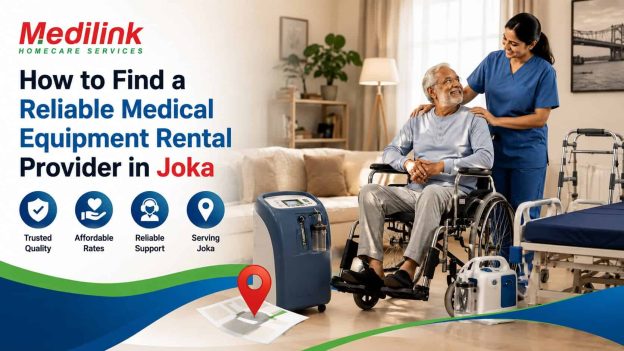
Based on our experience serving families across Joka, Behala, New Alipore, Thakurpukur, and Garia, the most common equipment requests we handle are:

Hospital Beds

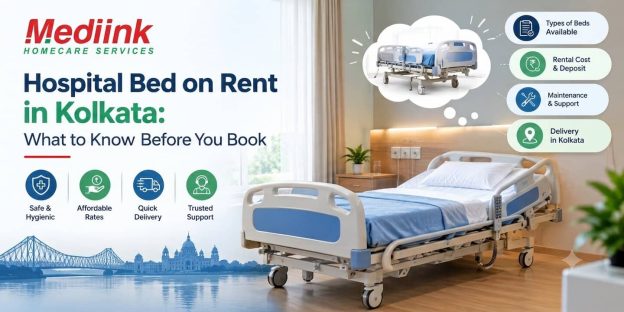
An adjustable hospital bed is the foundation of effective home care for a bedridden or semi-mobile patient. It allows the head and foot of the bed to be raised independently, which matters enormously for patients recovering from abdominal surgery, heart conditions, or stroke. Manual beds are available at lower rental rates; electrically adjustable beds offer more comfort for patients who need frequent position changes. We help families assess which type is appropriate based on the patient’s condition and the caregiver’s capacity.

Oxygen Concentrators and Cylinders

Oxygen support at home is one of the most frequent requests we receive — particularly following respiratory illness, cardiac events, or post-COVID recovery. An oxygen concentrator draws in room air and delivers purified oxygen continuously without requiring cylinder refills, making it the preferred option for home use. We set up the equipment, demonstrate correct usage to the family, and remain available if any issue arises during the rental period. For short-duration or transport use, cylinders are also available.

Wheelchairs and Walkers

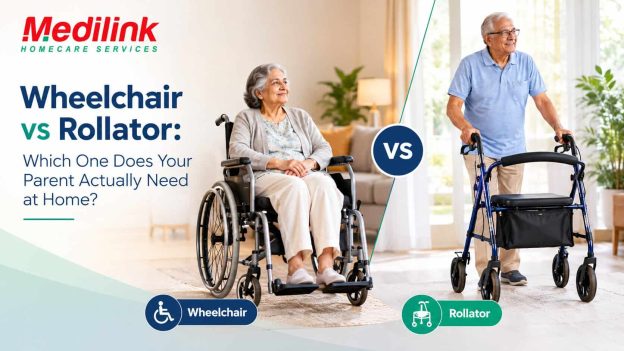
Mobility aids are needed across a wide range of situations — from elderly patients with arthritis or balance issues to younger patients recovering from orthopaedic surgery. We assess the patient’s weight, the width of doorways in their home (a genuine issue in older South Kolkata buildings), and the nature of movement required before recommending the right wheelchair type. Folding transit wheelchairs, self-propelled models, and specialised reclining chairs are all available.

BiPAP and CPAP Machines

Respiratory therapy equipment is increasingly requested for home use — both for sleep apnoea management and for patients with chronic breathing conditions requiring non-invasive ventilation support. These devices require careful initial setup and user training. Our team handles both.

Air Mattresses and Pressure-Relief Equipment

For patients who are bedridden for extended periods, pressure sore prevention is a clinical priority. An air mattress alternates pressure points continuously, dramatically reducing the risk of skin breakdown. We consider this essential for any patient spending more than a few days in bed and routinely recommend it alongside hospital bed rentals for post-surgical or post-stroke patients.

How the Rental Process Works at Medilink

We have deliberately kept our process simple, because families dealing with a medical situation do not need administrative complexity on top of everything else.

A family contacts us — by phone, by WhatsApp, or through our website. We ask a few basic questions: the patient’s condition, the equipment needed, the location, and the expected duration. Based on this, we recommend the appropriate equipment, explain the rental cost clearly with no hidden charges, and confirm availability.

We deliver to the patient’s home, set up the equipment properly, and walk the family through how to use it safely. This demonstration step is not optional for us — it is part of every delivery. A family managing a BiPAP machine or an oxygen concentrator for the first time needs to understand exactly what they are looking at.

During the rental period, we remain in contact. If something is not working correctly, if the patient’s condition changes and different equipment is needed, or if the rental period needs to be extended or ended early, we handle it. The relationship does not end at delivery.

Our service area covers Joka, Behala, Thakurpukur, New Alipore, Garia, Jadavpur, and surrounding South Kolkata localities. For urgent requests — and many of ours are urgent — we prioritise same-day or next-morning delivery wherever possible.

What Families Often Get Wrong

In our years of working with home care patients across South Kolkata, a few patterns come up repeatedly — not because families are careless, but because nobody has told them what to watch for.

The first is choosing equipment based on price alone. A lower-cost oxygen concentrator that delivers inconsistent oxygen purity, or a hospital bed with a mattress that does not properly support a bedridden patient, can genuinely worsen outcomes. We always explain the clinical trade-offs, not just the price.

The second is underestimating the importance of the mattress. Most families focus on the bed frame and treat the mattress as secondary. For a patient spending significant time in bed, the mattress determines whether pressure injuries develop. We never separate the two in our recommendations.

The third is not telling us enough about the home environment. South Kolkata has a mix of older narrow-corridor housing and newer apartment buildings. The right wheelchair for a patient in a ground-floor house with wide doorways is different from the right wheelchair for a patient on the fourth floor of a building with a narrow lift. We need to know the home before we recommend the equipment.

When Professional Guidance Changes the Outcome

There are situations where the right equipment alone is not enough — and where clinical guidance at the point of setup genuinely matters.

A patient newly discharged after a cardiac event, now requiring oxygen at home, needs someone to explain what oxygen saturation reading should prompt a call to the doctor. A family managing a post-stroke patient needs to understand safe positioning to avoid aspiration. These are not equipment questions — they are care questions. But they arise in the context of equipment setup, and they require someone with clinical training to answer them.

At Medilink, our team includes trained healthcare professionals alongside our equipment service. When we deliver and set up at a patient’s home, the person doing that setup understands the clinical context — not just the technical operation of the device. That is the difference between a rental company and a healthcare provider.

A Note From Our Team

We are based in Joka and serve the communities around us — Behala, Thakurpukur, New Alipore, Garia, and further across South Kolkata. We started with a clear conviction: families managing a patient at home should never feel alone in that process, and they should never have to figure out clinical equipment without proper guidance.

If you are in the early stages of planning home care for a family member, or if you have been told a patient will be discharged shortly and you are not sure what to arrange, reach out to us. We will listen first, and then help you make the right decisions.

At Medilink Healthcare, we treat every equipment request as a care request — because that is what it always is.

Frequently Asked Questions

Can I rent medical equipment in Joka or Behala on the same day?

For most commonly needed equipment — hospital beds, oxygen concentrators, wheelchairs — same-day delivery is available within our South Kolkata service area, subject to availability. We prioritise urgent post-discharge requests. Call us as early as possible to confirm.

How is rented medical equipment sanitised before delivery?

Every piece of equipment at Medilink is cleaned and disinfected between uses using hospital-grade sanitisation procedures. For respiratory equipment like oxygen concentrators and BiPAP machines, we also function-test the device before dispatch to verify it is operating within correct parameters.

What is the minimum rental period for a hospital bed or oxygen concentrator?

We offer flexible rental plans starting from a weekly basis, with lower effective rates for monthly or longer-term rentals. We do not lock families into fixed long contracts — if the patient recovers ahead of schedule and no longer needs the equipment, we arrange early return without penalty.

Is it better to rent or buy a wheelchair for an elderly parent?

It depends on the patient’s prognosis and long-term mobility outlook. For short-term recovery, renting is almost always more practical and cost-effective. For a patient with a permanent or progressive mobility limitation, purchasing a wheelchair that is properly fitted to their measurements and usage pattern is often the better long-term decision. We help families think through which situation applies.

Do you provide training on how to use the rented equipment at home?

Yes — without exception. Every delivery includes a hands-on demonstration for the patient’s family or caregiver. For equipment like oxygen concentrators, BiPAP machines, and patient monitors, we cover both correct operation and what to watch for clinically. We also remain available by phone throughout the rental period if any question arises.

About the Author

This article is written by the clinical and care coordination team at Medilink Healthcare Services, a home healthcare provider based in Joka, South Kolkata. Medilink has been supporting families across the Joka, Behala, Thakurpukur, and Garia areas with professional home nursing, physiotherapy, elderly care, and medical equipment rental and sales. Every recommendation in this post comes from direct experience working with patients and families in their homes.

post surgery care at home

What Happens in the First Week after Surgery — and Why Home Care Makes the Difference

Content Summary

The first week after surgery is the most critical period of recovery. Pain, wound care, medication schedules, and physical limitations all need careful attention. This article covers what families should expect during post-surgery recovery at home, the most common complications that arise, and how professional home care helps patients heal safely and comfortably.

The Week Nobody Warns You About

Most patients leave the hospital within a day or two of surgery. The procedure is done, the surgeon is satisfied, and discharge papers are handed over with a list of instructions. It feels like the hard part is over.

But for many patients and their families, the real challenge begins at home. The hospital environment — with nurses checking in regularly, equipment on hand, and doctors nearby — is replaced by a quieter, more uncertain situation. Pain that was managed by IV medication now needs to be handled with tablets. A wound that was dressed by trained hands now falls to a family member who may have never done it before.

The first seven days after surgery are medically the most significant. Most post-operative complications — wound infections, blood clots, respiratory issues, medication reactions — show up during this window. How well this week is managed has a direct effect on how fast and fully a patient recovers.

Understanding what this period actually involves helps families prepare better. And knowing when professional support is needed makes a real difference.

What the Body Goes Through After Surgery

Surgery, regardless of its type, puts the body under significant physical stress. The moment the procedure ends, the healing process begins — and it is not linear. There are good hours and difficult ones, sometimes within the same day.

Pain is the most immediate concern. It typically peaks in the first 48 to 72 hours and then gradually eases. Managing it properly during this window is important not just for comfort but for recovery. Uncontrolled pain discourages movement, and restricted movement increases the risk of complications like deep vein thrombosis or pneumonia.

Fatigue is another constant presence. Even patients who feel mentally alert are often exhausted by basic activities like walking to the bathroom or sitting upright for a meal. This is normal. The body is directing most of its energy toward tissue repair and immune response. Pushing through this fatigue without guidance can set recovery back.

Appetite tends to drop significantly in the first few days, particularly after abdominal or digestive surgeries. Nutrition still matters — it directly supports wound healing and immunity. Small, easily digestible meals at regular intervals are far better than forcing a full plate that the patient cannot manage.

Common Types of Surgery and What Recovery Looks Like

Post-surgery needs vary depending on the procedure, but certain patterns repeat across most types.

Orthopaedic surgery — hip replacements, knee replacements, fracture repairs — requires careful movement support. Patients are often partially or fully weight-bearing restricted. Falls during this period can undo the surgery entirely. Physiotherapy exercises, usually beginning within the first 24 to 48 hours, must be done correctly and consistently.

Abdominal surgery — appendectomies, hernia repairs, bowel resections — leaves the patient with restricted core movement. Coughing, laughing, or even deep breathing can be painful. Wound care is critical because abdominal incisions are prone to infection if not kept clean and dry.

Cardiac surgery — bypass procedures, valve repairs — demands close vital sign monitoring. Patients need regular blood pressure and heart rate checks, careful medication management, and immediate response protocols if anything feels off.

Cancer-related surgery — tumour removal, mastectomy, colostomy — often involves not just physical recovery but significant emotional adjustment. Patients may be dealing with drainage tubes, stoma care, or altered body functions that require skilled hands and compassionate support.

Each of these situations calls for more than basic rest. They call for trained, attentive care at home.

What Can Go Wrong — and What to Watch For

Post-operative complications are not rare. They are a recognised medical reality that most surgical teams prepare patients and families for — but often without enough practical detail about what to look for at home.

Wound infection is one of the most common. Signs include increasing redness around the incision, warmth, swelling, discharge that is cloudy or foul-smelling, or a fever that develops two or three days after discharge. An early infection caught quickly can often be treated with antibiotics. A late-detected one may require hospitalisation.

Deep vein thrombosis — blood clots forming in the leg veins — is a risk after any surgery that limits movement. Swelling in the calf, pain or tenderness in the leg, or skin that feels warm to the touch should prompt immediate medical attention. If a clot travels to the lungs, it becomes a pulmonary embolism, which is a medical emergency.

Medication errors are more common than families expect. Post-surgery prescriptions often include multiple drugs — pain relief, antibiotics, blood thinners, anti-nausea medication — with different dosing schedules. Missing a dose, doubling up, or taking medications too close together can cause serious problems.

Dehydration is underestimated. Patients who are in pain, nauseous, or simply fatigued often drink far less than they should. Dehydration slows wound healing, increases infection risk, and can cause confusion in older patients.

When the Patient Is an Older Adult

Post-surgery recovery in elderly patients carries its own set of considerations. Older adults take longer to heal. Their immune systems respond more slowly, and they are more sensitive to medication side effects. Confusion or disorientation — sometimes called post-operative delirium — is not uncommon in elderly patients in the days after surgery and can be alarming for families who do not know what they are looking at.

Mobility is a bigger concern too. An older adult recovering from a hip replacement or a cardiac procedure needs consistent, careful support to move, bathe, and manage daily activities without risking a fall or strain. Family members who are well-intentioned but untrained can inadvertently cause harm.

The challenges of caring for an elderly patient at home after surgery overlap significantly with the broader needs of elder care — the need for regular monitoring, daily support, emotional reassurance, and a trained presence that families cannot always provide on their own. Understanding these overlapping needs is something we have written about in detail in elder care at home and how important it is today.

What Professional Post-Surgery Home Care Actually Covers

Professional post-surgery home care is not just about having someone present. It is about having the right person present — one who knows what to do and what not to do at every stage of recovery.

Wound care is the most clinical component. A trained nurse changes dressings using proper technique, monitors healing progress, identifies early infection signs, and records any changes to report to the attending doctor. This is not something that should be left to guesswork.

Medication management covers the full prescription schedule — ensuring the right drug is given at the right time, in the right dose, with the right food or water requirements. For post-surgery patients on multiple medications, this structure is essential.

Vital sign monitoring — blood pressure, temperature, pulse, oxygen levels — gives an ongoing picture of how the patient is responding to recovery. Abnormal readings caught early allow for intervention before a minor concern becomes a serious one.

Mobility support covers safe movement, positioning, and physiotherapy exercises as prescribed. For patients recovering from orthopaedic or cardiac surgery, this is directly tied to how fully they regain function.

Nutritional support — ensuring the patient eats and drinks adequately, at appropriate times and in appropriate amounts for their surgical recovery — is often overlooked but matters considerably.

Emotional support should not be dismissed as secondary. Post-surgery patients often feel helpless, frustrated, anxious, or low. A calm and experienced caregiver who is consistent and communicative makes the experience of recovery less isolating.

How Medilink Approaches Post-Surgery Care at Home

At Medilink, we understand that no two surgeries are the same, and no two patients recover in the same way. Our post-surgery home care is built around the individual — the type of surgery, the patient’s age and general health, the family’s capacity to support, and the specific risks involved.

Our trained nursing staff handles wound care, medication schedules, and vital monitoring. Our physiotherapy team supports movement and rehabilitation exercises from the earliest appropriate point in recovery. And our caregivers are present to assist with daily activities, mobility, and the kind of steady, quiet support that makes a difficult week more manageable.

We also stay in close communication with families, explaining what we observe, what is normal, and what requires attention. Recovery should not feel like a mystery to the people closest to the patient.

If you would like to understand the full scope of what we provide, our post-surgery care service covers everything in detail — from nursing support and wound care to physiotherapy and around-the-clock monitoring.

Recovery Happens at Home — Make It Count

The first week after surgery is not a waiting period. It is an active medical phase that shapes how completely a patient heals. Pain management, wound care, nutrition, movement, and monitoring all need to happen correctly and consistently during these critical days.

Families carry a great deal of this responsibility, often without training or a clear framework for what to do. Professional home care fills that gap — not by replacing the family’s role, but by ensuring the clinical part of recovery is handled by people who do it every day.

A patient who is well-supported at home in the first week heals faster, faces fewer complications, and returns to normal life sooner. That outcome is within reach for most patients. It just takes the right support at the right time.

FAQs

1. How long does post-surgery recovery at home typically take?

It depends on the type of surgery. Minor procedures may require one to two weeks of close care at home. Major surgeries — cardiac, orthopaedic, or cancer-related — often need four to eight weeks of structured support.

2. What are the warning signs that something is wrong during recovery?

Fever above 38°C, increasing pain rather than decreasing pain, redness or discharge from the wound, leg swelling, difficulty breathing, or sudden confusion are all signs that need prompt medical attention.

3. Can family members handle post-surgery care without professional help?

For very minor procedures, it may be possible. For most surgeries, particularly in elderly patients or those with complex prescriptions and wound care needs, professional support significantly reduces the risk of complications.

4. Is post-surgery home care available in Kolkata?

Yes. Medilink Healthcare Services provides post-surgery home care across Joka and South Kolkata, with trained nurses, physiotherapists, and caregivers who work around the patient’s recovery plan.

5. Does post-surgery home care include physiotherapy?

Yes. For surgeries involving joints, bones, or cardiac function, physiotherapy is a core part of the recovery plan. At Medilink, we coordinate physiotherapy sessions at home as part of the post-surgery care programme.

About the Author

This article is written by the content team at Medilink Healthcare Services, focusing on simple, research-based healthcare information. The team aims to help patients and families understand post-surgery recovery needs and make informed decisions about home healthcare support.