Medilink Ambulance and Medical Services Pvt. Ltd.

Medilink Ambulance

Medilink Homecare

Medilink Ambulance and Medical Services Pvt. Ltd.

Medilink Ambulance

Medilink Homecare

Medilink Ambulance and Medical Services Pvt. Ltd.

Medilink Ambulance

Medilink Homecare

Medilink Ambulance and Medical Services Pvt. Ltd.

Medilink Ambulance

Medilink Homecare

Medilink Ambulance and Medical Services Pvt. Ltd.

Medilink Ambulance

Medilink Homecare

Category Archives: Home care Services

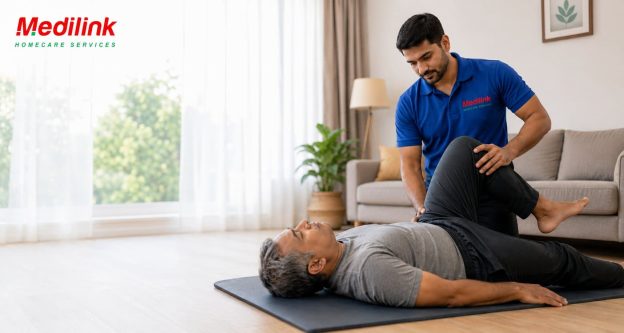
Physiotherapist at Home in Joka

Why Families in Joka Are Choosing a Physiotherapist at Home Over a Clinic Visit

When a family member comes home after a knee replacement at AMRI Dhakuria or a stroke episode managed at a Behala nursing home, the discharge letter rarely prepares families for what comes next. The doctor says: continue physiotherapy. But the patient cannot sit in an auto for forty minutes each way. The stairs hurt. The family has work. And the nearest physiotherapy clinic in Joka closes by 8 PM.

This is the gap that home physiotherapy fills — and it is exactly why searches for a physiotherapist at home in Joka have increased steadily over the past two years. What was once considered a luxury or a last resort is now a practical, clinically sound choice for post-surgical recovery, stroke rehabilitation, and elder care in South Kolkata.

This guide is for families making that decision. It covers what home physiotherapy actually involves, which conditions are best served by it, what a proper session looks like, and how to tell a qualified therapist from someone with a foam roller and a certificate.

Who Actually Needs Physiotherapy at Home in Joka and Thakurpukur

The answer is broader than most families expect. Home physiotherapy is not only for bedridden patients. Across South Kolkata, the most common reasons families call for a home visit physiotherapist include:

  • Post-operative recovery after knee replacement (TKR) or hip replacement — the first 6 to 8 weeks when the patient cannot safely travel daily
  • Stroke rehabilitation — where early, consistent physiotherapy in the familiar home environment significantly improves functional recovery
  • Fracture recovery — particularly in elderly patients with femur or wrist fractures who are non-weight bearing
  • Neurological conditions such as Parkinson’s disease, where gait training and balance exercises are needed regularly
  • Chronic back pain or cervical spondylosis in adults who work from home and cannot take repeated half-days for clinic appointments
  • Post-Covid recovery — persistent breathlessness, muscle weakness, and fatigue that responds well to guided physiotherapy
  • Geriatric care — elderly patients in Joka, Barisha, and surrounding areas who need regular mobility maintenance and fall prevention training

In most of these cases, the therapy is not different from what a clinic provides. The difference is that it happens on the patient’s own floor, with their own furniture as props, in a physical environment that actually mirrors what they will face every day during recovery.

What a Home Physiotherapy Session in South Kolkata Actually Involves

Families unfamiliar with home physiotherapy often expect a brief massage and a few arm circles. A proper home physio session from a qualified BPT-trained therapist is considerably more structured than that.

A first session always begins with a functional assessment: the therapist observes how the patient moves, stands, transfers from a chair, climbs a step, and manages basic daily tasks. For post-stroke patients, they assess grip strength, balance, and whether the affected limb has any returning function. For post-surgical patients, they check the wound for healing, measure range of motion with a goniometer, and assess pain levels with movement.

From that assessment comes a session plan. Depending on the condition, treatment techniques used in home visits include:

  • Therapeutic exercises — progressive resistance and range-of-motion exercises designed for that patient’s stage of recovery
  • Manual therapy — soft tissue mobilisation, joint mobilisation, and passive stretching performed by the therapist’s hands
  • Electrotherapy — portable IFT (Interferential Therapy) and TENS machines that a qualified therapist brings along for pain relief and muscle stimulation
  • Gait training — structured walking practice with or without an assistive device, using the patient’s own home layout
  • Neuromuscular re-education — for stroke patients, this includes task-specific practice of daily movements to rebuild neural pathways
  • Home exercise prescription — exercises the patient and family member perform between visits, with clear guidance on sets, repetitions, and warning signs

A genuine session lasts between 45 minutes and an hour. It is not a 20-minute comfort visit. If a therapist is regularly finishing in under thirty minutes, that is a quality signal worth noting.

What to Check Before Hiring a Home Physiotherapist Near Joka or Behala

South Kolkata has a large number of practitioners offering home physio visits. Not all of them hold a Bachelor of Physiotherapy (BPT) degree, which is the minimum qualification for independent practice in India. Some hold diploma certificates or short courses, which are insufficient for managing post-surgical or neurological cases.

Before confirming a therapist, families should ask the following:

  • Do they hold a BPT degree from a recognised university? Ask which institution and check if it is recognised by the Indian Association of Physiotherapists (IAP).
  • Do they have MIAP or FIAP membership? These indicate professional standing with the IAP, which has a registered member directory.
  • Have they managed similar cases before? A therapist experienced in post-TKR recovery may have limited neurological training. Ask specifically about their case history.
  • Do they carry portable equipment? A therapist without at minimum a TENS machine and a goniometer is not equipped for thorough home treatment.
  • Can they communicate with the treating orthopaedic surgeon or neurologist? This coordination matters for cases where the therapy plan needs to align with surgical advice.

In areas like Joka, Thakurpukur, and Barisha, there are qualified registered physiotherapists who do home visits. The Sulekha and Practo platforms list some of them with ratings. But direct verification of qualifications remains the responsibility of the family.

When Home Physiotherapy Is Clinically Better Than a Clinic Visit

The instinct of many families is to assume a clinic is always more thorough. In reality, for several common conditions in elderly and post-surgical patients, home physiotherapy produces better outcomes — and there are specific reasons for this.

First, the therapy happens in the actual environment of recovery. A post-stroke patient learning to walk in a clinic corridor is practising in a space with no relevance to their daily life. The same patient practising transfers from their own bed, navigating the small bathroom at the end of their corridor, and climbing the two steps at their front door — that is therapy that directly reduces fall risk at home.

Second, consistency is higher at home. The evidence on physiotherapy adherence is clear: patients who miss sessions lose ground. For a seventy-year-old in Joka who needs a family member to accompany them to a clinic, the friction of each visit means skipped sessions are common. A therapist who comes to the house removes that barrier completely.

Third, family members are present and can be trained. A caregiver who watches a session and understands the exercise rationale will continue reinforcing correct movement throughout the day. This caregiver involvement is almost impossible to replicate in a busy clinic environment.

Home physiotherapy is not always the right choice. For patients who need hydrotherapy, advanced electrotherapy equipment, or group rehabilitation settings, a clinic or inpatient rehabilitation centre like the HCAH facility near Chak Garia is more appropriate. But for the large proportion of recovery cases in South Kolkata — post-surgical orthopaedic recovery, stroke rehabilitation, and elderly mobility maintenance — home visits are clinically and practically well suited.

Realistic Recovery Timelines for Common Conditions in Home Physiotherapy

One of the most common frustrations families experience is misaligned expectations. Either they expect recovery too fast and stop sessions too early, or they worry progress has stalled when the timeline is actually normal.

For post-knee replacement rehabilitation, the initial phase of reducing swelling, achieving 90 degrees of knee flexion, and building enough quadriceps strength to climb stairs safely typically takes 6 to 8 weeks of consistent home physiotherapy — usually 4 to 5 sessions per week in the first three weeks, tapering to 3 sessions per week thereafter.

For stroke rehabilitation, the highest rate of neurological recovery occurs in the first 3 to 6 months. Physiotherapy during this window — ideally starting within days of discharge — is critical. Families in Joka who delay starting home physio for even two to three weeks after discharge reduce the functional gains their relative can achieve. The window is not closed after 6 months, but it does narrow.

For chronic back pain or cervical spondylosis, the goal of home physiotherapy is not cure but management and functional improvement. A structured 12-session programme over 6 weeks, followed by a home exercise programme the patient continues independently, is a realistic and achievable outcome.

For general elderly mobility maintenance, physiotherapy is ongoing rather than time-limited. Regular sessions every 1 to 2 weeks, focused on balance, strength, and gait, can materially reduce fall rates — which is one of the leading causes of decline in elderly patients in South Kolkata.

The Specific Situation in Joka, Thakurpukur, and Behala

South Kolkata has a dense and aging residential population spread across areas like Joka, Barisha, Thakurpukur, Behala Chowrasta, Sarsuna, and Paschim Putiary. Many of these neighbourhoods are a significant distance from the major rehabilitation hospitals in central Kolkata. Daily travel to physiotherapy is not realistic for a large proportion of post-surgical or elderly patients in these areas.

At the same time, local physiotherapy clinics in Joka and Thakurpukur — including Physio Care on BH Road and several registered practitioners listed with the IAP West Bengal Branch — provide strong community-level options for patients who can travel. Home physiotherapy complements these services, covering patients who cannot.

Families caring for post-surgical or neurologically compromised relatives in these areas are often making do with informal arrangements. A nephew drives the patient three times a week, the therapy gets missed when he is travelling, and the recovery stalls. The logistics problem is often what delays proper rehabilitation — not the patient’s clinical condition or the family’s willingness to invest in recovery.

Getting Qualified Home Physiotherapy in South Kolkata

If you are caring for a family member who needs regular therapy sessions but cannot travel consistently, the right starting point is to find a BPT-qualified therapist with relevant case experience who covers your area. Assess their qualifications, ask for a brief consultation before committing, and ensure they have a structured session plan — not just a comfort visit routine.

Medilink Healthcare Services provides qualified physiotherapy and rehabilitation service in home for patients across Joka, Thakurpukur, Behala, and surrounding South Kolkata areas. Sessions are conducted by registered physiotherapists, coordinated with the patient’s treating physician, and designed around the actual demands of home-based recovery.

Frequently Asked Questions

How soon after surgery can home physiotherapy begin?

For most orthopaedic surgeries including knee and hip replacement, home physiotherapy can begin within 3 to 5 days of discharge, once the wound is stable and the patient is cleared by the surgeon. For stroke, it should begin as early as the first week home. Earlier is almost always better.

What equipment does a home physiotherapist bring?

A well-equipped home physiotherapist carries a portable TENS or IFT unit for pain relief and muscle stimulation, a goniometer for measuring joint range of motion, resistance bands, and any exercise props relevant to your condition. Ultrasound therapy machines are occasionally brought for specific musculoskeletal conditions.

How many sessions per week are typically needed?

Post-surgical patients generally need 4 to 5 sessions per week in the first 2 to 3 weeks, reducing to 3 per week as the recovery stabilises. Stroke patients benefit from daily sessions in the acute recovery phase if possible. Elderly mobility maintenance typically needs 1 to 2 sessions per week.

Does insurance cover home physiotherapy?

Some health insurance policies in India do cover post-surgical physiotherapy as part of a hospitalisation package or a post-discharge benefit. Check your policy document under the rehabilitation or post-hospitalisation clause. Coverage for standalone home physio visits varies significantly by insurer.

Is a home physiotherapist able to handle neurological cases like stroke or Parkinson’s?

Yes, provided the therapist has neurological physiotherapy training. Always ask specifically about their experience with neuro cases before booking. A therapist with only orthopaedic experience may not be equipped for the specific techniques required in stroke or Parkinson’s rehabilitation.

Can a family member be trained to assist between sessions?

Yes, and a good therapist will actively involve the primary caregiver in each session. They will demonstrate the home exercises, explain the rationale, and set clear boundaries on which exercises can be done independently and which need therapist supervision. This caregiver training is one of the key advantages of home physiotherapy over clinic visits.

About Medilink Healthcare Services

Medilink Healthcare Services is a home healthcare provider based in Joka, South Kolkata, serving families across Joka, Thakurpukur, Behala, Barisha, and surrounding areas. The Medilink team includes trained nurses, physiotherapists, and care attendants who deliver clinical home care services under physician guidance. Content published on this blog is reviewed for clinical accuracy and reflects the service context of South Kolkata’s home healthcare environment.

Bedridden Patient Care Near Me

Bedridden Patient Care Near Me: What Families in South Kolkata Need to Know

Content Summary:

Caring for a bedridden patient at home is physically demanding and medically complex. This guide explains what proper bedridden care involves, what complications families risk without professional support, and how Medilink’s trained nursing team helps families in South Kolkata manage it safely.

When someone you love becomes bedridden — whether after a stroke, a major surgery, a fall, or the slow progression of a chronic illness — the first few days feel like a blur.

Discharge papers. Medication schedules. Equipment you’ve never used before. A hospital bed delivered to a room that was never meant to be a medical space. And in the middle of all of it, a family trying to figure out: how do we actually do this?

Most families in Kolkata start by managing on their own. It comes from love, and it comes from the belief that nobody will care for a parent or spouse the way family will. That belief is true. But love alone cannot prevent a pressure sore. It cannot monitor oxygen saturation at 2 a.m. It cannot correctly reposition a 70-kilogram patient every two hours to prevent the complications that hospital nurses warn about but rarely explain.

If you have been searching for bedridden patient care near you, this guide is for you — not to sell you something, but to honestly explain what bedridden care requires, what happens when critical steps are missed, and what professional nursing support looks like when it is done right.

Why Bedridden Care Is More Medically Demanding Than Most Families Expect

A bedridden patient is not simply a person who cannot walk. They are a person whose entire body is affected by immobility.

Pressure sores — also called bedsores or decubitus ulcers — are the most well-known risk, and they develop faster than most families realise. Tissue damage can begin within two to six hours of unrelieved pressure on a bony surface. By the time redness appears on the skin, the damage underneath has often already spread. By the time the skin breaks, infection risk is significant.

But pressure sores are only one concern. Bedridden patients are also at high risk of chest infections, because lungs that are not regularly expanded through position changes accumulate secretions. Urinary tract infections are common, particularly in patients with catheters. Muscle contractures develop quickly in limbs that are not moved through their range of motion. And malnutrition creeps in when patients who are already unwell lose appetite and no one is monitoring their daily intake carefully.

The families we support at Medilink often tell us the same thing: they did not know how fast things could change. A patient who was comfortable on Monday had a reddened patch of skin on Wednesday that nobody caught. By Friday it had worsened into something that needed clinical attention.

This is not a failure of love or effort. It is the reality of caring for someone medically complex without clinical training.

What Professional Bedridden Patient Care Actually Involves

There is a difference between keeping someone comfortable and providing clinical care. Both matter, but they require different skills.

Repositioning and Pressure Care

Trained nurses follow a strict two-hourly repositioning protocol. This is not just turning someone from side to side — it involves correct positioning with pillows and wedges to completely offload pressure points like the heels, sacrum, and shoulders. It also involves skin inspection every time, checking for early-stage redness before it progresses.

Respiratory and Chest Care

Bedridden patients need regular head-of-bed elevation, and many benefit from chest physiotherapy techniques — percussion and postural drainage — to prevent secretion buildup. In patients with oxygen dependency, monitoring saturation levels and managing equipment correctly is a clinical responsibility, not something to be guessed at.

Catheter and Hygiene Care

Catheter management requires sterile technique to avoid infection. Personal hygiene for a bedridden patient — bed baths, oral care, hair washing, nail care — is not simply about dignity, though dignity absolutely matters. Neglected hygiene is a direct route to skin breakdown and infection. Our caregivers are trained to do this gently and completely, even for patients who are sensitive or resistant due to confusion or discomfort.

Nutrition and Hydration Monitoring

Many bedridden patients have swallowing difficulties, suppressed appetite, or require feeding through a nasogastric tube. A trained carer monitors daily food and fluid intake, watches for signs of dehydration, and coordinates with the treating physician when intake drops below acceptable levels.

Medication and Vitals

A bedridden patient typically has a complex medication schedule — multiple drugs, multiple timings, some of which cannot be delayed or missed. Vital sign monitoring (blood pressure, pulse, temperature, oxygen saturation) is done routinely because bedridden patients can deteriorate quietly. Catching a spike in temperature early or an unusual drop in blood pressure before it becomes a crisis is exactly what clinical oversight provides.

What Happens When Families Try to Manage Alone

We want to be direct about this, because families deserve honesty.

Caregiver burnout is not a weakness. It is a documented clinical outcome in family members caring for bedridden patients without professional support. The physical demands of repositioning, bathing, and lifting a full-grown adult, done multiple times a day every day, cause musculoskeletal injuries in a significant proportion of home caregivers. The sleep disruption alone — waking through the night to check on a patient — accumulates into a kind of exhaustion that affects judgment and emotional health.

We have had patients brought to our attention after weeks of family-only care where the signs were clear: bedsores that had progressed because no one knew what early-stage looked like, catheters that had not been changed on the right schedule, and patients who had lost significant weight because someone was estimating how much they had eaten rather than measuring it.

None of this happens because families do not care. It happens because bedridden care is a clinical skill that takes training to do safely.

How Medilink Supports Bedridden Patients in South Kolkata

Medilink has been serving families in Joka and South Kolkata for over a decade. Our nursing team is trained, verified, and supervised. When we place a nurse or caregiver with a bedridden patient, it is not a matchmaking exercise — it is the beginning of a structured care plan.

Our nursing care services for bedridden patients include:

  • Full clinical assessment of the patient’s condition and existing care needs before the first visit
  • Repositioning protocols with documented skin checks, every two hours for high-risk patients
  • Wound care and bedsore management, from prevention through active treatment
  • Catheter care and personal hygiene support with trained, dignified technique
  • Vital sign monitoring and medication administration with proper documentation
  • Nutrition monitoring and coordination with the treating physician when needed
  • Regular family updates, so you always know how your loved one is doing and why

We cover Joka, Thakurpukur, Behala, Narendrapur, Garia, and the wider South Kolkata area. For families further away who are searching for bedridden patient care near them, we do a location check before confirming service — and in most cases, we can reach you.

We also understand that many families in this situation are managing finances carefully alongside everything else. We are transparent about pricing from the first call. No hidden charges, no ambiguity about what is included.

When Should You Call for Professional Help?

This is the question families sit with the longest. There is often guilt attached to it — a sense that calling for outside help means admitting defeat.

It does not. It means recognising what the situation requires.

You should consider professional bedridden patient care if any of the following applies:

  • Your patient has been bedridden for more than a week and is not mobilising at all
  • You have noticed any skin redness, particularly over the heels, tailbone, or hips
  • Your patient has a catheter, feeding tube, IV line, or oxygen requirement at home
  • You are the primary or only carer and you have not been sleeping properly
  • Your patient is on multiple medications and you are not fully confident about the schedule
  • Your patient’s eating or drinking has dropped noticeably in the past few days

Any one of these is enough reason to call. You do not need to wait until things get worse.

A Word to Families Who Are Doing This Alone

If you are currently the sole carer for someone bedridden — waking at night, managing medications, trying to reposition someone who outweighs you, skipping your own meals because there is no time — please read this.

You are doing something extraordinary. And it is also okay to say that you cannot keep doing it alone at the same level. These are not contradictory statements.

Getting professional nursing support does not take your place in that person’s life. It gives the clinical work to someone trained for it, so that you can be the daughter, the son, the spouse — the person your loved one actually needs you to be. That is not a small thing.

We have spoken to families who waited months before calling. Every one of them, without exception, said they wished they had called sooner.

Frequently Asked Questions

What is the difference between a caregiver and a trained nurse for a bedridden patient?

A caregiver — also called a patient attendant or ayah — provides personal care: bathing, feeding, companionship, and basic assistance with daily tasks. A trained nurse provides clinical care: wound management, catheter care, vital sign monitoring, medication administration, and identification of medical warning signs. Bedridden patients with medical equipment at home, existing bedsores, or complex medication needs require a trained nurse, not just a caregiver. Medilink assesses your patient’s specific needs and recommends the right level of support before any placement is made.

How often should a bedridden patient be turned or repositioned?

The standard protocol for high-risk patients is repositioning every two hours, around the clock. This is not a guideline — it is a clinical necessity. Tissue damage from pressure begins within two to six hours of sustained compression over a bony area. For patients who are incontinent or who have already developed early-stage redness, repositioning may need to happen more frequently, combined with moisture barrier creams and special mattresses. Our nurses follow written repositioning schedules with timed documentation, not guesswork.

Can Medilink provide bedridden patient care in areas outside Joka?

Yes. Our primary base is in Joka, South Kolkata, and we cover Behala, Thakurpukur, Narendrapur, Garia, Tollygunge, and surrounding localities. For families in other parts of Kolkata or nearby areas, please call us to confirm coverage before booking. We are expanding steadily and may be able to reach you even if your area is not listed here.

Does Medilink provide 24-hour nursing for bedridden patients?

Yes. For patients who need continuous clinical oversight — those on oxygen, those with active wound care needs, or those at high risk of sudden deterioration — we offer 24-hour live-in and rotating shift arrangements. Our 24/7 nursing plans are structured with documented handover between shifts, so nothing is missed at the transition point between caregivers. This is something families trying to manage alone often cannot replicate, and it is one of the most significant ways professional care improves patient outcomes at home.

About the Author

This article was written by the clinical care team at Medilink Healthcare Services, a trusted home healthcare provider based in Joka, South Kolkata. With over 10 years of experience and more than 1,500 patients served, Medilink’s nursing staff and care coordinators support bedridden patients, post-surgical recovery cases, and elderly care needs across South Kolkata — bringing clinical expertise directly to the home.

Oxygen Support at Home

Oxygen Support at Home in Joka: What Families Need to Know Before They Begin

Content Summary

This guide explains what home oxygen therapy involves, who needs it, and how families in Joka and nearby South Kolkata areas can manage it safely and with confidence. It covers the most common caregiver concerns — from equipment use and safety rules to emotional support — and outlines how professional home healthcare support can make a meaningful difference in outcomes and daily quality of life.

When a doctor tells a family that their elderly parent needs oxygen at home, the first reaction is rarely calm. There is the worry about whether you will do it right, the fear that something will go wrong in the middle of the night, and the very practical question of how daily life is supposed to continue with an oxygen concentrator sitting in the bedroom and tubes running across the floor.

These are the questions that real caregivers in Joka, Narendrapur, Diamond Harbour Road, Maheshtala and other parts of South Kolkata are asking — often quietly, because there aren’t many places that give them an honest, useful answer. This guide is an attempt to do exactly that.

Oxygen support at home, done well, allows patients with serious respiratory conditions to live with more dignity and more comfort than a hospital setting often permits. Done poorly — or without proper guidance — it carries real risks. Understanding the difference starts here.

Who Needs Oxygen Support at Home?

Home oxygen therapy is typically prescribed when a patient’s blood oxygen saturation consistently falls below the level needed for the body to function normally — usually measured as an SpO2 reading below 90% at rest. A doctor or pulmonologist makes this call based on clinical assessment; it is never a decision to make independently.

The most common conditions that lead to a home oxygen prescription in India include:

  • Chronic Obstructive Pulmonary Disease (COPD) — the most frequent cause among older patients in South Kolkata, often linked to decades of exposure to cooking smoke, vehicular pollution, or tobacco
  • Interstitial lung disease and pulmonary fibrosis — progressive conditions that gradually reduce the lungs’ ability to transfer oxygen
  • Post-COVID lung complications — a condition many families in Kolkata are now navigating following severe infections in recent years
  • Advanced heart failure — where the heart’s reduced pumping ability leads to poor oxygen delivery
  • Severe anaemia or recovery from major surgery — where supplemental oxygen supports healing and reduces cardiac strain

In Joka and the surrounding areas of Diamond Harbour Road, Thakurpukur, and Behala, where elderly residents often have limited access to hospital-based respiratory care, home oxygen setup has become an important part of managing these conditions long-term.

Understanding the Equipment: What Will Be in Your Home

Most families have never dealt with medical oxygen equipment before. The unfamiliarity itself is a source of anxiety. Knowing what each piece does makes the whole setup far less intimidating.

Oxygen Concentrator

This is an electric device, roughly the size of a bedside table, that draws in room air and filters out nitrogen to deliver concentrated oxygen through a nasal cannula. It runs continuously and does not require cylinder refills, making it the preferred choice for long-term home use. In Kolkata, where power fluctuations are common, a stabiliser or UPS backup is an important companion to the concentrator.

Oxygen Cylinders

Used as a backup during power cuts or when the patient needs to move briefly — a short trip to a clinic, for example. A standard D-size cylinder at 2 litres per minute lasts roughly five to six hours. Cylinders must be stored upright, away from heat sources, and should never be allowed to empty completely before replacement.

Nasal Cannula and Mask

The nasal cannula — a lightweight tube with two small prongs that sit just inside the nostrils — is the most common delivery method for lower-flow oxygen. For patients who need higher concentrations, a face mask may be used. Both need to be checked regularly for fit, cleaned daily, and replaced periodically to prevent infection and skin irritation around the nose and ears.

Pulse Oximeter

A small clip-on device that reads blood oxygen saturation levels through the fingertip. Every family managing home oxygen therapy should own one and know how to use it. A reading consistently below 90% at rest, or below 88% during activity, is a signal to contact the treating doctor promptly.

The Safety Rules That Cannot Be Skipped

Oxygen accelerates combustion. A room where oxygen is in use requires specific precautions, not as bureaucratic formality, but because the risks are real and the consequences severe.

  • No smoking — anywhere in the home, not just in the patient’s room. This is the most important rule and the one most frequently violated in Indian households where family members smoke.
  • No open flames — candles, agarbatti, gas stoves should not be used near an active oxygen source. In Kolkata homes where cooking happens in close quarters, the concentrator placement matters.
  • No oil-based products near the face — Vaseline, coconut oil, and other petroleum-based products are flammable and should never be applied around the nose or lips of a patient on oxygen. Use water-based moisturisers only.
  • Maintain distance from electrical equipment — the concentrator generates mild heat and should have clear airflow around it, kept at least 30 cm from walls and curtains.
  • Check tubing daily — kinked or cracked tubes reduce oxygen delivery without triggering any alarm. A daily visual check takes under a minute and matters more than most people realise.

What Caregivers Actually Worry About — And What Helps

After years of supporting families through home oxygen setups in South Kolkata, the concerns we hear most often are not technical. They are human.

“What if the machine stops working at night?”

Always have a backup cylinder charged and ready. Know your equipment provider’s emergency contact. A basic alarm or monitoring setup can alert caregivers to any interruption. And if a 24/7 caregiver or nurse is in place, this worry largely resolves itself.

“How do I know if the oxygen level is right?”

The flow rate is set by the prescribing doctor and should never be adjusted without medical guidance — even if the patient feels short of breath. A pulse oximeter reading, logged twice daily, gives a reliable picture of how the patient is responding to therapy. Consistent readings above 92–94% at rest usually indicate the prescribed flow is working.

“Our patient refuses to wear the cannula for long periods.”

This is a very common challenge, especially with elderly patients who find the equipment uncomfortable or associate it with loss of independence. Consistent, gentle encouragement works better than insistence. Making the routine predictable — same time for meals, medication, and oxygen rest periods — often reduces resistance over days or weeks. A skilled home nurse or trained caregiver can make a meaningful difference here.

The Role of Professional Home Healthcare in Oxygen Management

Managing a family member on home oxygen therapy is not a task that families in Joka or anywhere else in South Kolkata should have to figure out alone. The learning curve is real, the responsibility is significant, and caregiver fatigue — particularly among adult children managing both a parent’s care and their own household — is one of the most underacknowledged challenges in home healthcare.

Several professional services make a practical difference:

Nursing Care at Home

A trained home nurse visits regularly to monitor oxygen saturation, check equipment, observe for signs of deterioration — morning headaches, confusion, or unusual drowsiness can indicate CO2 retention in COPD patients — and communicate findings to the treating physician. For families managing a complex respiratory case without a medical background, this oversight is invaluable. Medilink’s nursing care service in Joka provides exactly this level of skilled, structured monitoring.

Chronic Disease Management

Conditions like COPD or interstitial lung disease that require home oxygen are not one-time events — they are long-term management challenges. Structured chronic disease management at home, including medication tracking, dietary monitoring, and periodic vital sign review, helps prevent the acute flare-ups that send patients back to hospital. Avoiding one emergency admission often makes months of home support worth the investment.

Medical Equipment Rental and Support

Families shouldn’t have to navigate the Kolkata medical equipment market — often confusing, inconsistently priced, and difficult to quality-check — on their own. Access to reliable oxygen concentrators, backup cylinders, pulse oximeters, and related equipment through a trusted home healthcare provider removes a significant logistical burden. Medilink’s medical equipment rental and sales service ensures families in Joka get verified equipment with proper setup guidance.

Respite Care for Caregiving Families

The caregiver — often a daughter-in-law, an adult child, or a spouse — needs rest too. Burnout among family caregivers managing oxygen-dependent patients is common and underreported. Respite care gives the primary family caregiver time away while ensuring the patient remains safely supervised. A few hours or a full day of professional coverage can reset a caregiver’s capacity to continue the work.

Frequently Asked Questions

Can my elderly parent use an oxygen concentrator at home without a nurse?

Yes, in many cases — if the patient is stable, the flow rate is correctly set by a doctor, and a family member has been trained in basic monitoring. However, for patients with COPD, heart failure, or cognitive decline, professional nursing support is strongly recommended. The monitoring role — tracking SpO2, checking for warning signs, adjusting positioning — requires consistency that is difficult to sustain without training.

How many hours per day does a patient typically need oxygen?

This is determined entirely by the prescribing doctor based on how severe the patient’s oxygen deficiency is. Some patients need it only during sleep or physical activity. Others — particularly advanced COPD patients — require 15 or more hours daily. Never reduce or increase hours without medical advice, even if the patient reports feeling comfortable.

Is it safe to use an oxygen concentrator during Kolkata’s summer power fluctuations?

A voltage stabiliser is strongly recommended for all concentrators used in Kolkata homes. In addition, keeping a backup oxygen cylinder charged and immediately accessible is essential for power cut situations. Families in Joka and nearby areas where outages are more frequent should discuss a structured power backup plan with their equipment provider before starting home therapy.

What signs indicate the patient needs immediate medical attention?

Contact a doctor or emergency service immediately if the patient shows: SpO2 falling below 88% despite oxygen use, increasing breathlessness or gasping, confusion or unusual drowsiness (especially in the morning, which can signal CO2 build-up in COPD), blue colouring around the lips or fingertips, or chest pain. These are not situations to manage at home without medical input.

Can I get oxygen equipment and home nursing support together in Joka?

Yes. Medilink Healthcare Services in Joka offers both equipment support and trained home nursing care for respiratory patients. Families can access a coordinated setup — equipment, professional monitoring, and caregiver guidance — without having to manage multiple vendors.

At Medilink, We Walk This With You

At Medilink Healthcare Services, we have supported families across Joka, Narendrapur, Thakurpukur, Maheshtala, and the broader Diamond Harbour Road corridor through some of their most difficult caregiving moments — including managing elderly parents on long-term oxygen therapy for COPD, recovering patients post-hospitalisation, and families navigating respiratory illness with no prior medical background.

We know that the first call a family makes — often late at night, often confused — is rarely about a specific service. It’s about not knowing what to do next. Our response to that call is always the same: we listen first, then we help you build a plan that makes sense for your family, your home, and your patient’s actual condition.

Our team includes trained nurses with respiratory care experience, a medical equipment support service for concentrators and backup cylinders, and a broader care network covering chronic disease management, respite care, and round-the-clock live-in support for patients who need it. All of this is available within Joka and surrounding South Kolkata areas — without the patient needing to travel.

If your family is setting up home oxygen support, or if you’re already managing it and feeling unsure — reach out to us. You don’t have to figure this out alone.

About the Author

Medilink Healthcare Editorial Team

Home & Healthcare Specialists, Joka, South Kolkata

The Medilink editorial team comprises healthcare professionals and experienced home care coordinators with hands-on expertise in elderly care, chronic disease management, and post-hospitalisation recovery across South Kolkata. Content is reviewed for clinical accuracy and reflects the realities faced by Indian families managing complex care at home.

Dementia or Alzheimer's at Home

Caring for a Loved One with Dementia or Alzheimer’s at Home

Content Summary

Dementia and Alzheimer’s are life-altering conditions — not just for the person diagnosed, but for the entire family. This guide covers the real challenges of caring for a dementia patient at home, what a daily care routine should look like, how to manage difficult behaviours, and when professional help becomes necessary. If you are a family in Joka or South Kolkata looking for practical, expert-backed guidance, this post is for you.

A parent who no longer recognises your face. A grandparent who wanders out of bed at 2 AM. A loved one who becomes agitated at the smallest change in routine. For thousands of families across Kolkata — and particularly in neighbourhoods like Joka, Thakurpukur, and the areas around the Joka Metro — these are not abstract situations. They are everyday realities.

Dementia and Alzheimer’s disease are conditions that strip away memory, independence, and eventually the ability to perform even the most basic daily tasks. India is facing a quietly growing dementia crisis. With millions of older adults already living with some form of cognitive decline, the demand for informed, compassionate home care is greater than ever.

And yet, most families are left to figure it out on their own.

This post is for them.

What Dementia Actually Does to a Person — and to a Family

Dementia is not a single disease. It is an umbrella term for a group of symptoms caused by different brain disorders — the most common being Alzheimer’s disease, which accounts for the large majority of cases. Vascular dementia, Lewy body dementia, and frontotemporal dementia are other frequent forms.

What they share is a progressive decline in cognitive function — memory, reasoning, language, and eventually physical function. The person affected does not simply become forgetful. Over time, they may not recognise family members, lose the ability to manage medications, struggle to eat safely, become prone to wandering, and experience significant personality and behaviour changes.

For the family, this creates an exhausting dual burden: the emotional grief of watching someone they love change, and the practical challenge of providing round-the-clock support they may not be trained for.

The Most Common Struggles Families Report

Across caregiver communities and forums, certain pain points come up again and again when families talk about managing dementia at home.

Wandering is among the most frightening. A person with dementia may walk out of the house, lose track of where they are, and be unable to ask for help or explain their situation. In a dense, busy area like South Kolkata, the risks are serious.

Sundowning — a pattern of increased confusion and agitation in the late afternoon and evening — disrupts the entire household. Sleep becomes broken for both the patient and the caregiver.

Medication management becomes a constant battle. Patients may refuse medication, forget they have taken it and ask for it again, or react unpredictably to dosing changes.

Personal hygiene is often resisted. Bathing, dressing, and toileting require patience and specific techniques — and for families without training, these interactions can become distressing for everyone involved.

And behind all of this is caregiver burnout. Family members — often a daughter, daughter-in-law, or spouse — take on enormous responsibility without a break, without training, and frequently without acknowledgement. This affects their own physical and mental health deeply.

What a Good Home Care Routine Looks Like

Structure is one of the most important tools in dementia care. People with cognitive decline feel more settled, less anxious, and less prone to behavioural episodes when their days follow a predictable pattern.

A well-structured day begins at the same time every morning. Personal care — bathing, grooming, dressing — happens in a calm, unhurried way, with the caregiver guiding gently rather than rushing. Mealtimes are regular, with food that is appropriate for the patient’s chewing and swallowing ability. Afternoons can include cognitive engagement: simple activities like sorting objects, looking through old photographs, listening to familiar music, or short walks outdoors.

Evening routines are particularly important because they set the tone for night. Dimming lights, reducing noise, and avoiding stimulating activities after sunset helps manage sundowning. A consistent bedtime, with familiar cues, supports better sleep.

Throughout the day, communication needs to be patient and simple. Short sentences. Eye contact. A calm tone. When the person with dementia becomes confused or upset, arguing or correcting them is almost never effective. Redirecting their attention — gently moving them toward something pleasant or familiar — is far more useful.

This is not a set of techniques that come naturally. It takes training, practice, and the emotional reserves to stay consistent even on difficult days.

Making the Home Environment Safer

The home environment itself needs to be adapted as the disease progresses. Falls are a major risk — both because dementia affects balance and spatial awareness, and because medications can cause dizziness.

Removing loose rugs, installing grab bars near the toilet and in the bathroom, ensuring adequate lighting in hallways and staircases, and securing cupboards containing medicines or sharp objects are foundational steps. Door alarms or sensors can alert the family if the patient tries to leave the house at night.

A proper home safety assessment, done by someone trained to identify dementia-specific risks, makes a significant difference. This is one of the areas where professional support adds real value — not just clinical care, but practical environmental preparation.

Our home safety assessments and modifications service is specifically designed to help families prepare their homes for loved ones with cognitive and mobility challenges.

Managing Difficult Behaviours with Patience and Skill

Aggression, paranoia, repetitive questioning, and hallucinations are among the most challenging aspects of advanced dementia. Families are often unprepared for these and struggle to respond in a way that does not escalate the situation.

A few principles hold across most difficult behavioural episodes. First, never try to argue or correct a person who is experiencing dementia-related confusion — this almost always makes things worse. Second, look for what is underneath the behaviour. Agitation often signals discomfort: pain, hunger, needing to use the toilet, or simply feeling unsafe. Addressing the underlying need often resolves the episode. Third, remain calm. The emotional tone of the caregiver directly affects the emotional state of the patient.

For families who are struggling with these situations regularly, having a trained caregiver — rather than a family member in distress — manage these moments makes a measurable difference in outcomes.

When Family Care Is Not Enough — and That Is Okay

Many families in Kolkata feel that bringing in outside care is an admission of failure or a sign that they love their relative less. This is one of the most damaging myths around home care.

The reality is that dementia care is a skilled profession. It requires specific training in communication techniques, behaviour management, nutrition for cognitive decline, fall prevention, and emotional regulation under pressure. Most family members have none of this training and are learning as they go, often while holding down jobs and caring for their own children.

Professional care does not replace family love. It supports it. A trained caregiver handles the clinical and practical demands of the day so that family members can be present as family — not as exhausted medical attendants.

For families who need consistent daily support, our 24/7 live-in caregiver services provide exactly that — a trained, vetted professional who becomes a steady presence in the home.

For families who need regular respite — time to rest, attend to their own health, or simply breathe — our respite care for family caregivers service steps in so caregivers can step back, without the patient going without support.

The Importance of Medication Management in Dementia

Dementia patients are often on multiple medications — for the cognitive symptoms themselves, and for other conditions like hypertension, diabetes, or heart disease that frequently accompany old age. Managing these correctly is critical.

A missed dose of a blood thinner, or a doubled dose of a sedative, can have serious consequences. Patients with dementia cannot always report that they have or have not taken medication. They may hide tablets, spit them out, or forget entirely.

A trained caregiver manages this systematically — using pill organisers, logged schedules, and close observation to ensure medications are taken correctly and that any changes in behaviour or physical state that might signal a reaction are noticed and reported.

Our medication management and reminders service handles this precisely, reducing one of the highest-risk elements of home care for dementia patients.

Cognitive Engagement and Quality of Life

Dementia care is not only about preventing harm. It is also about maintaining quality of life — ensuring that the person with dementia continues to experience moments of connection, pleasure, and dignity.

Cognitive engagement activities — memory games, music from their era, familiar stories, gentle craft activities, short outdoor walks — are not just pleasant add-ons. They slow the rate of cognitive decline and significantly improve mood and behaviour. A patient who is mentally engaged has fewer episodes of agitation and better sleep.

Companion care plays an important role here. Our companion care service provides consistent social interaction and cognitive engagement, tailored to the patient’s stage of decline and personal history.

Dementia and Alzheimer’s Care in Joka — Why Location Matters

Families in Joka and the surrounding areas of South Kolkata have specific needs when it comes to dementia care. Access to reliable, trained, in-home professionals — rather than facility-based care that requires daily transport — is essential for a patient whose sense of security depends heavily on familiar surroundings.

The familiar environment of home — the smells, the sounds, the layout of the rooms — provides an important anchor for dementia patients. Moving to a facility often causes a significant deterioration in cognitive function and emotional wellbeing, particularly in the earlier and middle stages of the disease.

Home care, provided by professionals who understand the specific nature of memory-related conditions, keeps the patient in the environment where they are most settled — while bringing clinical expertise and structure to a household that might otherwise be overwhelmed.

Conclusion

Caring for a loved one with dementia or Alzheimer’s at home is one of the most demanding things a family can take on. It requires patience, knowledge, structure, and an honest acknowledgement of when the situation needs more support than one person — or one family — can provide.

The families who manage it best are not the ones who do everything alone. They are the ones who build the right team around their loved one — combining their own presence and love with the clinical skills and consistent support of trained professionals.

We at Medilink Healthcare Services have been supporting families in Joka, Thakurpukur, and across South Kolkata through exactly these challenges. Our dementia and Alzheimer’s care team includes experienced memory care specialists who understand both the clinical and emotional dimensions of this work. Whether your family needs daily support, around-the-clock care, or a trained professional to give you a break while your loved one is in safe hands — we are here. Reach out to us and let us help you build a care plan that works.

Frequently Asked Questions

1. What is the difference between dementia and Alzheimer’s disease?

Alzheimer’s is the most common form of dementia, accounting for the majority of cases. Dementia is the broader term that covers multiple conditions causing cognitive decline. All Alzheimer’s is dementia, but not all dementia is Alzheimer’s.

2. Can a dementia patient be cared for at home safely?

Yes, in most cases — particularly in the earlier and middle stages of the disease. With appropriate home safety modifications, a structured routine, and trained caregiver support, many patients live comfortably at home for years. The key is having the right support in place.

3. What are the early signs of Alzheimer’s that families should watch for?

Early signs include forgetting recent events or conversations repeatedly, confusion about time or place, difficulty with familiar tasks, misplacing objects frequently, changes in mood or personality, and withdrawal from social activities. If these patterns emerge consistently, a medical evaluation is important.

4. How do professional caregivers handle aggression or agitation in dementia patients?

Trained caregivers are taught to identify triggers, respond calmly, redirect attention rather than confront, and address any underlying discomfort (pain, hunger, need for toileting) that may be driving the behaviour. They do not argue with or correct a patient in a confused state.

5. Is dementia care available in Joka and South Kolkata?

Yes. Medilink Healthcare Services provides professional dementia and Alzheimer’s care at home across Joka, Thakurpukur, and surrounding areas. Our team operates 24/7 and can be reached by phone or WhatsApp.

6. What should I do if my family member with dementia wanders at night?

Door alarms, secure locks, and motion-sensor lights are practical first steps. A live-in caregiver who maintains a night watch is the most reliable solution for patients who wander regularly. This is something our team can support directly.

About the Author

This article is written by the clinical and content team at Medilink Healthcare Services, drawing on direct experience of supporting families managing dementia and Alzheimer’s care across South Kolkata. Medilink provides in-home nursing care, memory care support, companion services, and caregiver respite across Joka, Thakurpukur, and surrounding areas.

Doctor Visit at Home

How to Request for a Doctor to Do Regular Home Visits

Content Summary

This blog explains how families can request regular doctor home visits for elderly patients, recovering individuals, and people living with chronic illnesses. It discusses when home consultations become necessary, how the process works, common mistakes families should avoid, and why personalised home healthcare is becoming increasingly important. The article also highlights the growing demand for Doctor consultation in Joka and explains how Medilink Healthcare provides reliable doctor home visit services in Joka and nearby areas.

There was a time when doctor home visits were considered normal in many Indian households. Family doctors knew the patient personally, understood the family history, and visited homes whenever someone elderly or seriously ill could not travel easily. Over time, healthcare became more hospital and clinic focused, and regular home visits slowly became less common.

But in recent years, things have started changing again.

Today, many families are once again searching for reliable doctor home visit services, especially for elderly parents, recovering patients, and individuals dealing with long-term illnesses. The reason is simple — not every patient is physically comfortable travelling repeatedly to hospitals or clinics.

For some people, even a short journey can become exhausting.

Families often realise this problem after multiple hospital visits. The patient becomes tired, waiting times become stressful, and regular follow-ups start feeling physically and mentally draining. This is where regular doctor home visits become extremely helpful.

Why More Families Are Choosing Doctor Home Visits

Healthcare is not only about medicines and prescriptions. Comfort, emotional stability, and proper monitoring also play an important role in recovery and long-term wellbeing.

When a patient receives medical attention at home, the environment itself feels calmer. Elderly patients especially tend to feel more relaxed inside familiar surroundings instead of crowded hospital waiting rooms.

In many cases, family members also get more time to discuss concerns with the doctor properly.

This becomes important because elderly patients often have multiple health conditions at the same time. A quick clinic consultation may not always allow enough discussion about appetite changes, weakness, sleep problems, mobility issues, or behavioural changes.

During home visits, doctors can observe the patient more naturally. They can understand:

  • How the patient is living
  • Whether movement inside the house is safe
  • If medications are being followed properly
  • How caregivers are managing daily support
  • Whether recovery is improving or declining

These small observations often help doctors make better decisions regarding treatment and patient care.

Situations Where Regular Home Visits Become Necessary

Not every patient requires a doctor at home regularly. But there are certain medical and practical situations where home consultations become highly beneficial.

Elderly Patients with Mobility Problems

One of the most common reasons families request doctor home visits is mobility difficulty. Many senior citizens suffer from arthritis, balance problems, joint pain, or weakness that makes travelling difficult.

Even getting into a vehicle can become painful for some elderly patients.

Repeated hospital travel in such conditions often increases physical stress instead of helping recovery.

Patients Recovering After Hospitalisation

After surgeries or serious illnesses, many patients need follow-up monitoring but are not physically strong enough for repeated clinic visits.

Patients recovering from:

  • Fractures
  • Stroke
  • Surgery
  • Respiratory infections
  • Severe weakness

often recover more comfortably with home-based medical monitoring.

Chronic Illness Monitoring

Patients living with diabetes, blood pressure problems, COPD, neurological conditions, or kidney-related diseases usually require continuous observation over long periods.

Regular home visits help doctors monitor changes gradually instead of waiting for conditions to worsen suddenly.

Elderly People Living Alone

In Kolkata, many senior citizens now live alone because children work in other cities or outside India. Families often worry about how their parents are managing medications, eating habits, or sudden health complications.

Regular doctor visits at home provide reassurance both for the elderly person and the family members staying far away.

How to Properly Request a Doctor for Home Visits

Many families feel unsure about how to arrange regular doctor consultations at home. In reality, the process is usually quite simple if handled properly.

The first step is explaining the patient’s condition clearly.

Families should provide proper details regarding:

  • Age of the patient
  • Existing medical conditions
  • Mobility limitations
  • Current medications
  • Recent hospitalisation history
  • Emergency history if any

This information helps healthcare providers understand the level of care required.

It is also important to discuss how frequently the patient may need monitoring. Some patients require weekly visits, while others may only need monthly follow-ups.

The frequency should always depend on the patient’s medical condition rather than convenience alone.

The Importance of Consistency in Home Healthcare

One thing many families overlook is consistency.

A single doctor visit may help temporarily, but regular monitoring creates a much clearer understanding of the patient’s long-term health condition.

For example, doctors can gradually notice:

  • Changes in breathing patterns
  • Weight loss or weakness
  • Medication side effects
  • Reduced mobility
  • Mental confusion
  • Sleep disturbances

These signs are often missed when patients visit clinics only during emergencies.

Regular monitoring also helps in adjusting medications at the right time before complications become serious.

Why Behaviour and Communication Matter So Much

Families usually focus on qualifications while selecting healthcare services, which is obviously important. But behaviour and communication are equally important in home healthcare.

Patients, especially elderly individuals, often become emotionally dependent on familiar medical support.

A doctor who communicates patiently can make patients feel emotionally secure. In many homes, elderly people feel anxious about their health but hesitate to express concerns openly during rushed clinic consultations.

Home visits create a more comfortable environment for proper discussion.

Family members also get opportunities to ask practical caregiving questions about:

  • Food habits
  • Medication timing
  • Sleep issues
  • Weakness
  • Physiotherapy support
  • Emergency warning signs

Good communication often improves patient confidence and treatment cooperation significantly.

Common Mistakes Families Should Avoid

While arranging home healthcare support, some families make decisions too quickly without evaluating service quality properly.

Choosing healthcare support only based on lower cost can sometimes create problems later. Medical reliability, professionalism, response time, and patient safety should always come first.

Families should also avoid delaying emergency treatment assuming home visits alone are enough for critical situations.

Home healthcare is excellent for monitoring and ongoing support, but severe emergencies may still require immediate hospitalisation.

Another common mistake is poor medical record management.

Maintaining proper records of:

  • Prescriptions
  • Test reports
  • Blood pressure readings
  • Sugar monitoring
  • Previous hospital discharge papers

helps doctors understand the patient’s condition much more accurately during each visit.

Growing Demand for Doctor Consultation at Home

The demand for home healthcare services has increased rapidly across Kolkata over the last few years.

Families are becoming more aware of the benefits of personalised healthcare support at home. Elderly care needs are increasing, and many working professionals cannot physically accompany parents to hospitals regularly due to work schedules or living outside the city.

This has naturally increased the demand for Doctor consultation in Joka and nearby areas where families are searching for reliable medical support that is both professional and accessible.

People now prefer healthcare systems that reduce stress for both patients and caregivers.

Choosing a Reliable Home Healthcare Provider

Before selecting any healthcare service, families should evaluate the provider carefully.

A trustworthy healthcare provider should offer:

  • Qualified and experienced doctors
  • Professional communication
  • Timely response
  • Proper patient coordination
  • Transparent consultation processes
  • Reliable scheduling support

Trust becomes extremely important because home healthcare involves allowing medical professionals directly into the patient’s personal environment.

Families should feel confident not only about the doctor’s expertise but also about the overall professionalism of the service.

Final Thoughts

Regular doctor home visits are no longer considered temporary arrangements only for critically ill patients. They have now become an important healthcare solution for elderly individuals, recovering patients, and families looking for more personalised medical care.

The biggest advantage of home consultations is comfort. Patients feel safer, calmer, and more relaxed inside their own homes. Doctors also get a better understanding of the patient’s actual living condition, which often helps in providing more practical and patient-focused treatment guidance.

For families searching for Doctor consultation in Joka, reliable and compassionate home healthcare support can make a major difference in long-term patient wellbeing.

Medilink Healthcare provides doctor home visit services in Joka and nearby areas for elderly patients, recovering individuals, and families who require dependable medical support at home with personalised attention and professional care.

FAQ

1. Who should consider regular doctor home visits?

Regular doctor home visits are helpful for elderly patients, bedridden individuals, post-surgery patients, and people managing chronic illnesses who find travelling difficult.

2. How can I arrange a doctor home visit?

You can contact a home healthcare provider, explain the patient’s condition, share medical history, and discuss how frequently medical monitoring may be needed.

3. Are home doctor visits suitable for elderly patients?

Yes. Home visits reduce travel stress, long waiting times, and physical discomfort for senior citizens.

4. What information should families keep ready before a doctor visit?

Families should maintain prescriptions, previous reports, medication lists, and recent health updates for proper medical evaluation.

5. Can regular doctor home visits reduce hospital visits?

In many cases, yes. Regular monitoring helps detect health issues early and may reduce unnecessary hospital trips for routine follow-ups.

6. Is Doctor consultation in Joka available for homecare patients?

Yes. Many healthcare providers now offer Doctor consultation in Joka and nearby areas for elderly care and patient monitoring at home.

Author: Medilink Healthcare Editorial Team

The Medilink Healthcare editorial team creates practical healthcare content focused on elderly care, patient wellbeing, home healthcare services, and medical support solutions. Our articles are written to help families understand healthcare decisions more clearly through experience-driven and patient-focused information.

Elder Care at Home

Elder Care at Home: How Important Is It Today?

Content Summary

Elder care at home is becoming essential due to the growing elderly population and changing family structures. It provides personalized support, improves health outcomes, and ensures emotional well-being. Services like Elderly Care Service and Geriatric Support at Home in Kolkata help families manage care effectively while allowing elderly individuals to live safely and comfortably at home.

Changing Family Life and the Growing Need for Care

Caring for elderly family members has always been deeply rooted in our culture, but the way this care is delivered is slowly changing. In earlier times, joint families made it easier to look after aging parents because someone was always present at home. Today, with nuclear families becoming more common and work responsibilities increasing, continuous care is not always possible. At the same time, people are living longer, often with age-related health conditions that require regular attention. This combination of longer life and changing family structures has made elder care at home not just helpful, but increasingly necessary for many families.

Rising Elderly Population and Care Demand

India is going through a significant demographic shift. The elderly population is growing steadily and is expected to form a large portion of society in the coming decades. This increase is not just about numbers—it reflects a growing need for structured and reliable care systems. Many elderly individuals today live alone or spend long hours without supervision, especially in urban areas where family members may be working or living in different cities. This creates a clear gap between the care that is needed and what families can manage on their own.

What Elder Care at Home Really Means

Elder care at home helps bridge this gap by bringing professional support directly into the individual’s living environment. Unlike hospitals or care facilities, where routines are fixed and unfamiliar, home-based care adapts to the person’s lifestyle. It allows elderly individuals to stay in a place they understand and feel comfortable in, surrounded by familiar objects and routines. This sense of familiarity plays an important role in reducing stress and improving overall well-being, especially for those dealing with mobility challenges or chronic illnesses.

Beyond Medical Care: Daily Support and Companionship

Home care is not limited to medical assistance. While monitoring health conditions and managing medications are important, the scope of care is much broader. It includes helping with everyday activities such as bathing, dressing, eating, and moving safely. It also involves ensuring proper hygiene and nutrition. Just as important is companionship. Many elderly individuals experience loneliness, which can affect both mental and physical health. Having someone present for conversation and support can make daily life more comfortable and emotionally stable.

Maintaining Independence with Safety

One of the biggest advantages of elder care at home is that it allows individuals to maintain independence while staying safe. Instead of moving to a new environment, they can continue their daily routines with the support they need. They can eat familiar food, follow their preferred schedule, and remain connected to their surroundings. This balance between independence and assistance helps maintain dignity and confidence, which are essential for healthy aging.

Health Benefits of Receiving Care at Home

From a healthcare perspective, home-based care offers several practical benefits. It allows for more personalized attention and early identification of health issues. Small changes in health can be noticed quickly and managed before they become serious. Many studies also suggest that elderly individuals receiving care at home often experience better recovery outcomes and fewer hospital visits. Staying in a comfortable environment also reduces stress, which supports both physical and mental health.

Reducing Family Stress and Responsibility

Caring for an elderly family member can be physically and emotionally demanding, especially for working individuals. Managing daily care along with personal and professional responsibilities often leads to stress and fatigue. Home care services provide support that reduces this burden. Families can remain involved in the caregiving process without being overwhelmed, and they can focus more on spending quality time rather than managing every detail of care.

Signs That Indicate the Need for Home Care

There are certain situations where considering elder care at home becomes important. These signs should not be ignored, as early support can prevent complications and improve quality of life.

  • Difficulty in walking or frequent risk of falls
  • Trouble managing daily activities independently
  • Ongoing health conditions requiring regular monitoring
  • Memory issues or confusion
  • Long hours spent alone without supervision

Recognizing these signs early helps families make timely and informed decisions.

Growing Demand for Elder Care Services in Kolkata

Urban cities like Kolkata are seeing a steady rise in the demand for organized home care services. Changing lifestyles, increased awareness, and the need for reliable support systems are driving this growth. Families are now looking for solutions that provide consistent care without disrupting the comfort of home. This has led to the rise of services like Elderly Care Service and Geriatric Support at Home in Kolkata, which combine professional medical assistance with daily support and emotional care in a structured way.

Choosing the Right Care Provider Matters

Selecting the right service provider is a crucial step in ensuring quality care. It is important to look beyond basic services and focus on reliability and approach. A good provider ensures proper training, supervision, and communication. Key factors to consider include:

  • Availability of trained and verified caregivers
  • Regular monitoring and supervision
  • Transparent communication with family members
  • Personalized care plans based on individual needs

These elements help ensure that care is safe, consistent, and respectful.

How Medilink Healthcare Services Supports Families

In this growing need for structured care, Medilink Healthcare Services works to provide dependable home-based solutions. The focus is on understanding individual requirements and delivering care that fits naturally into daily life. By combining trained caregivers with a personalized approach, the service aims to support both medical needs and emotional well-being. This allows elderly individuals to live comfortably at home while giving families confidence that proper care is being provided.

Why Elder Care at Home Is Becoming Essential

Elder care at home is no longer just an option—it is becoming an essential part of modern living. As families continue to balance changing lifestyles with traditional responsibilities, home-based care offers a practical and respectful solution. It supports independence, ensures safety, and improves overall quality of life. Most importantly, it allows care to happen in a place that feels natural and comforting—the home.

 FAQs

1. What is elder care at home?

It is a service that provides medical and daily support to elderly individuals in their own home.

2. Why is home care important?

It ensures comfort, independence, and better physical and emotional health.

3. When should I consider it?

When daily tasks, mobility, or health conditions become difficult to manage alone.

4. Does it include emotional support?

Yes, companionship and mental well-being are key parts of home care.

5. Are services available in Kolkata?

Yes, there are professional services offering structured elderly care at home.

6. How do I choose the right provider?

Look for trained caregivers, proper supervision, and personalized care plans.

About the Author
This article is written by the content team at Medilink Healthcare Services, focusing on simple, research-based healthcare information. The team aims to help families understand elderly care needs and make informed decisions about home healthcare solutions.

care at home

Families in Kolkata Are Choosing Care at Home Instead of Longer Hospital Stays

In Kolkata, healthcare decisions are slowly changing. For years, most families followed a fixed approach—if someone fell seriously ill, they were admitted to a hospital and stayed there until recovery. It felt like the safest option, and in many cases, it still is.

But over time, especially after recent years, people have started to question whether every stage of recovery really needs to happen inside a hospital. In areas like Joka, Thakurpukur, and Behala, this thought is becoming more common, not because people are avoiding hospitals, but because they are trying to find a more practical balance.

What many families are realizing is that treatment and recovery are not always the same thing. Hospital care is essential during critical stages, but once the situation stabilizes, the need often shifts toward monitoring, support, and consistency. This is where the role of home healthcare services in Kolkata has started to become more visible in everyday conversations.

This change did not happen overnight. It came from experience. During the pandemic, when hospital beds were limited and movement was restricted, families had no option but to manage care at home. Guidelines from organizations like the World Health Organization and India’s National Health Authority supported monitored home care in specific cases. That period made people more aware of what could actually be managed outside hospital walls.

Looking at the Reality of Hospital Stays

Anyone who has managed a hospital stay in Kolkata understands how demanding it can be. The cost increases quickly, especially if the stay extends beyond a few days. Along with that, there is the constant activity, shared attention, and the challenge of coordinating everything around the patient.

For elderly individuals, the situation becomes more complicated. Being in an unfamiliar place for a long time often leads to discomfort or restlessness. Medical observations available through the National Center for Biotechnology Information also suggest that recovery is influenced not just by treatment, but by environment and mental comfort.

A Situation Many Families in Joka Understand

A family in Joka recently went through a situation that reflects what many others are experiencing. An elderly member had undergone a procedure and was discharged with instructions for careful monitoring, medication, and daily assistance.

At first, the family thought about extending the hospital stay, just to be on the safe side. But the environment was not comfortable for the patient, and the cost was becoming difficult to manage. They eventually decided to continue care at home with structured support.

Within a short time, the difference became clear. Daily routines were better managed, medication was given on time, and the patient felt more relaxed. The family, too, found it easier to handle their responsibilities without constant disruption.

This is not an isolated experience. Similar situations are becoming increasingly common across South Kolkata.

Why the Shift Feels Practical

The growing preference for home-based care is not based on emotion alone. It is a response to real challenges that families face every day. Managing work, travel, and patient care together is not easy, especially in a busy city.

At home, care becomes more consistent. The patient is in a familiar space, and support can be arranged in a way that fits the family’s routine. Instead of adjusting everything around hospital schedules, care adapts to daily life.

This balance is what many families are looking for.

Recovery Beyond Medical Treatment

Recovery is often seen only as a medical process, but there is more to it. Emotional comfort, routine, and familiarity all play a role in how a patient responds over time.

When patients are at home, they are surrounded by known environments and people they trust. This reduces stress and helps maintain a sense of normalcy. For elderly patients in particular, this can make a noticeable difference in how they recover.

It does not replace medical care, but it supports it in a way that hospitals cannot always provide.

A Gradual Change Across Kolkata

Across Kolkata, especially in areas like Joka and Thakurpukur, this shift is becoming more visible. Families are not moving away from hospitals, but they are using them differently. Critical treatment still happens there, but recovery is increasingly being managed at home.

This approach is more flexible and often more aligned with real-life needs. As awareness grows, more people are becoming open to this idea.

Final Thoughts

Healthcare is slowly adapting to the way people live today. It is no longer limited to one place or one approach.

For many families in Kolkata, especially in Joka and nearby areas, continuing care at home is becoming a practical decision rather than an uncertain one. It allows them to manage both health and daily life in a more balanced way.

As this shift continues, the importance of reliable home healthcare services in Kolkata will only increase. Choosing the right support system becomes an important part of that process.

Among the providers working in this space, Medilink Healthcare Services is one of the names supporting families with structured home care and healthcare services across South Kolkata.