 7450012800 / 033 24532800
 7450022800 / 7450062800
 medilink24x7@gmail.com
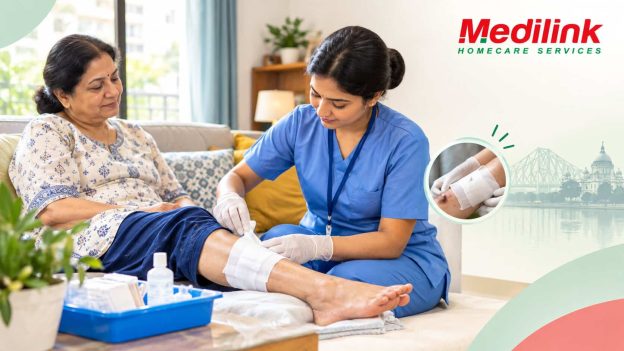
Content summary: Small clean cuts can be dressed at home. Wounds that are deep, slow to heal, new after surgery, or in people with diabetes or limited movement are safer with a trained nurse at home. Heavy bleeding, deep wounds and bites need a clinic or hospital. The blog ends with a plain verdict.
Wound dressing at home in Kolkata is safe for a small, clean cut or scrape. A wound that is deep, slow to heal, new after surgery, or on someone with diabetes or limited movement is better handled by a trained nurse. Heavy bleeding, deep cuts and animal bites need a clinic or hospital right away. This guide helps you tell which case you are in.
What a dressing does
A dressing keeps germs out, soaks up fluid from the wound, and gives the skin a clean place to heal. A dressing that is wet, dirty or put on wrongly can do more harm than good. That is why the type of wound matters.
Wounds you can usually handle at home
Small cuts and scrapes that are clean, not deep, and not bleeding heavily are usually fine at home. The basic steps are:
- Wash your hands well with soap and water.
- Rinse the wound gently under clean running water.
- Pat the skin around it dry with a clean cloth.
- Cover it with a clean dressing.
- Change the dressing when it gets wet or dirty.
Skip home remedies such as powders, pastes or oils on an open wound. They can bring in germs and make healing slower.
When a nurse at home is the better choice
Call a nurse if the wound needs more than a quick cover-up. This is common in these situations:
- After surgery. Stitches and surgical wounds need dressings changed the way your doctor advised, and someone needs to check how they are healing.
- Diabetes. Wounds, especially on the feet, heal slowly and can get infected quickly. They need trained eyes.
- Bedsores. Pressure sores in bedridden or elderly people need regular, careful dressing and position changes.
- Long-running wounds. If a dressing is needed every day or every few days for weeks, repeated clinic trips become very tiring.
- A patient who cannot travel easily. For an elderly or weak patient, the trip itself brings pain, fall risk and exhaustion. Traffic and waterlogged roads in the monsoon make it worse, even for families in areas like Behala, Joka and Tollygunge.
- A worried family. If you are afraid of hurting the person or doing it wrong, that is reason enough to ask for help.
A trained nurse can choose the right dressing, spot early signs of infection, and keep your doctor informed. If this sounds like your situation, nursing care at home is worth considering.
When to go to a clinic or hospital instead
A home nurse is not a replacement for emergency care. Go to a clinic or hospital straight away if:
- Bleeding does not stop after 10 minutes of firm pressure.
- The wound is deep, gaping, or has something stuck in it.
- It was caused by an animal or human bite.
- It came from a rusty or dirty object, and it has been a long time since the last tetanus injection.
- A burn is large, deep, or on the face or hands.
- The person feels faint, confused, or has numbness near the wound.
Signs of infection to watch for
Whoever is caring for the wound should watch for these signs:
- Redness that spreads
- More swelling or warmth
- Pus or a bad smell
- Pain that gets worse instead of better
- Fever
If you see fever or fast-spreading redness, see a doctor the same day.
Our verdict
For a small, clean wound that is healing well, you do not need a nurse. Wash it, cover it, and keep an eye on it.
For anything that needs repeated dressings, such as surgical wounds, diabetic wounds, bedsores or long-healing wounds, a nurse at home is usually the better choice. It is safer for the patient, because someone trained is checking the wound regularly. It is also easier on the family, because no one has to travel across the city every few days.
For bleeding that will not stop, deep wounds, bites or signs of serious infection, go to a clinic or hospital. Do not wait.
If you are not sure which group your wound belongs to, ask someone early. Wounds that are checked early are much easier to treat than wounds that have been left.
This article is general information and does not replace your doctor’s advice. Always follow the instructions given by the treating doctor.