 7450012800 / 033 24532800
 7450022800 / 7450062800
 medilink24x7@gmail.com
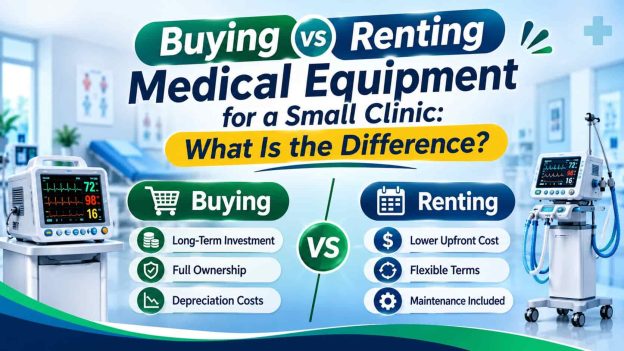
Buying medical equipment means paying the full price once and owning the device. Renting means paying a recurring fee to use it for an agreed period, usually with delivery, servicing and replacement handled by the provider. For a small clinic, renting suits short-term, occasional or uncertain needs. Buying suits devices that are used every day for years.
The choice between buying vs renting medical equipment comes down to three questions: how often you will use it, how long you will need it, and how much cash you want to tie up. The rest of this guide answers each one in plain terms.
What does buying medical equipment mean?
When you buy, the equipment becomes your asset. You pay the full cost upfront (or through a loan or instalments), and you are responsible for maintenance, repairs, calibration and eventual disposal or resale.
Buying gives you full control. You can use the device whenever you like, for as long as it works, with no monthly charge. The trade-off is a large one-time expense and the risk that the device ages or becomes outdated while you still own it.
What does renting medical equipment mean?
When you rent, you pay a fee, usually monthly or weekly, to use the equipment for a set time. The provider owns the device and normally takes care of delivery, setup, servicing and replacement if it fails.
Renting keeps your upfront spending low and your options open. The trade-off is that you pay for as long as you use the device, and over a long period the total rent can exceed the purchase price.
Buying vs renting: the key differences
| Factor | Buying | Renting |
| Upfront cost | High, paid at the start | Low, often a refundable deposit plus first rent |
| Long-term cost | Lower if used for years | Can add up beyond the purchase price |
| Ownership | Yours | Provider’s |
| Maintenance and repairs | Your responsibility | Usually covered by the provider |
| Flexibility | Low; you keep the device even if demand drops | High; return it when you no longer need it |
| Upgrades | You replace it at your own cost | You can switch to a newer model |
| Storage | You store it | The provider takes it back |
| Best for | Daily-use, long-life devices | Short-term, occasional or trial use |
When should a small clinic rent medical equipment?
Renting makes sense when the need is temporary, uncertain or occasional. Common cases:
- You are opening a new clinic and want to test patient demand before investing.
- A device is needed only for a season, a camp or a short treatment programme.
- The equipment is expensive and used a few times a month.
- You want to try a model before deciding to buy it.
- Cash flow is tight and you would rather spend on staff, rent and consumables.
Equipment commonly rented includes oxygen concentrators, hospital beds, wheelchairs, nebulisers, suction machines and CPAP or BiPAP devices.
When should a small clinic buy medical equipment?
Buying makes sense when a device is part of your daily work and has a long working life. Common cases:
- The device is used every day, such as a blood pressure monitor, pulse oximeter, thermometer or examination couch.
- You expect to need it for several years.
- The model changes slowly, so there is little risk of it becoming outdated.
- You have the budget and a plan for servicing and calibration.
If a device sits idle for most of the month, buying it is usually poor value. If it never rests, renting it for years usually costs more.
How do you decide? A simple break-even check
You do not need complex maths. Follow these steps:
- Note the purchase price, plus the yearly cost of servicing and calibration.
- Note the monthly rent for the same type of device.
- Estimate how many months you will realistically need it.
- Multiply the monthly rent by those months and compare it with the purchase price plus servicing.
If total rent stays well below the cost of owning, rent. If the rent is close to or higher than the cost of owning, buy. Add a margin for uncertainty: if you are not sure the clinic will still need the device in a year, lean towards renting.
What should you check before renting or buying?
Whether you rent or buy, verify the same basics:
- Approvals and quality: the device should be an approved, genuine product with documentation from the supplier.
- Calibration and servicing: ask for calibration records and how often the device is serviced.
- Hygiene: for rentals, ask how equipment is cleaned and sanitised between users.
- Response time: find out how quickly the provider replaces or repairs a faulty device.
- Agreement terms: check the rental period, deposit, late fees, damage charges and what happens if you want to return early.
- Backup: confirm whether a replacement is available if a device fails during use.
Can you rent first and buy later?
In many cases, yes. Renting a device for a few months shows you how often it is actually used and whether it suits your patients and staff. Once the need is proven, buying becomes a safer decision. Ask the provider in advance whether rent can be adjusted against the purchase price, since policies differ.
Medilink Healthcare Services offers both medical equipment rental and sales in Kolkata, so a clinic can start with rental and move to ownership when the numbers support it.
Frequently asked questions
Is renting cheaper than buying for a small clinic?
It is cheaper in the short term because the upfront cost is low. Over several years of daily use, buying is usually cheaper. The break-even check above shows where your clinic falls.
Who pays for repairs on rented equipment?
Usually the provider, as long as the damage is not caused by misuse. Always confirm this in the written agreement.
Does a small clinic need to buy everything?
No. Many clinics buy the basics they use daily and rent specialised or occasional equipment. This mixed approach keeps costs controlled and equipment utilisation high.
Conclusion
Rent when the need is short, uncertain or occasional. Buy when the device is used daily and for years. Run the break-even check, verify approvals, servicing and hygiene, and put every term in writing. A mixed approach often works best for a small clinic: buy the everyday essentials and rent the rest.