 7450012800 / 033 24532800
 7450022800 / 7450062800
 medilink24x7@gmail.com
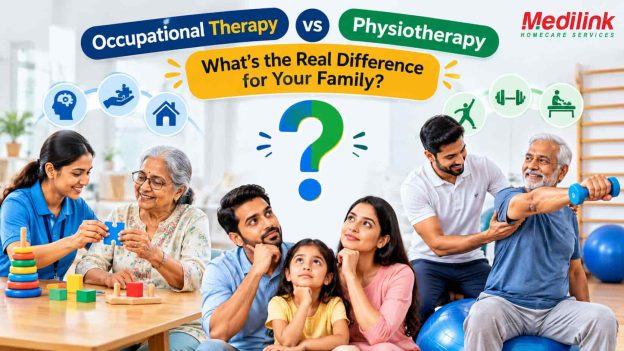
Content Summary: Physiotherapy works on movement: pain, strength, balance and walking. Occupational therapy works on daily life: dressing, bathing, cooking and managing the home safely. Many recoveries, such as after a stroke or a hip replacement, need both. This blog explains the difference in plain terms, shows how each looks at home, and helps you decide where to start.
Your father is home after a hip replacement. The surgeon says he needs therapy. One relative suggests physiotherapy, another mentions occupational therapy, and nobody can say clearly which one he needs. Or whether it’s both.
Here’s the short answer. Physiotherapy helps the body move better. Occupational therapy helps a person do everyday tasks better. One rebuilds the ability, the other makes sure that ability works in a real bedroom, bathroom and kitchen. Understanding occupational therapy vs physiotherapy early saves families time, money and a lot of second-guessing.
What is physiotherapy?
Physiotherapy focuses on movement, strength, balance and pain. A physiotherapist assesses how an injury, surgery or illness is limiting the body, then builds a plan to restore function. The plan usually combines guided exercise, stretching and strength work, sometimes with heat, cold, massage or ultrasound.
The question physiotherapy asks is simple: can this body move properly? Walking without a limp, climbing stairs, lifting an arm above the shoulder, standing up from a chair without help. Those are physiotherapy goals.
Families usually look for it after knee or hip replacement, fractures, frozen shoulder, long-standing joint pain, stroke, or a long illness that left an older person weak and unsteady.
What is occupational therapy?
Occupational therapy focuses on daily activities, which therapists call occupations. The word isn’t only about jobs. It covers anything a person needs or wants to do in a day: dressing, bathing, eating, writing, cooking, using a phone, taking medicines on time.
The question here is different: can this person do what matters to them, safely and on their own? If not, an occupational therapist works on two fronts. They train the person through practical, purposeful tasks. And they change the surroundings, with things like grab bars, adapted utensils or a rearranged room.
Occupational therapy also looks beyond muscles. Therapists assess vision, thinking and concentration problems that make ordinary tasks hard, which is common after a stroke.
Occupational therapy vs physiotherapy: the service differences at a glance
| Physiotherapy | Occupational therapy | |
| Main focus | Movement, strength, balance, pain | Daily activities and independence |
| Key question | Can the body move well? | Can the person manage daily life safely? |
| Typical methods | Exercise, stretching, strength training, heat or cold, massage, ultrasound | Task practice, adaptive tools, changes to routines and the home |
| Example goal | Climb stairs steadily after surgery | Bathe and dress without help |
| Often involved in | Joint pain, fractures, post-surgery recovery, weakness | Stroke, hand function, memory and vision-related difficulties |
The overlap is real. Both can work with stroke, orthopaedic problems, balance and chronic pain, and both care about fine and gross movement. The difference is the lens. Physiotherapy looks at the body part. Occupational therapy looks at the person’s day.
A hip replacement, seen through both lenses
Take a 68-year-old recovering from a hip replacement (a typical example, not a specific patient). The physiotherapist checks hip strength, how he walks with a walker or stick, and how he manages stairs. Exercises rebuild strength and balance session by session.
The occupational therapist looks at his day instead. Can he use the toilet without bending too far? How does he put on trousers while the new hip is restricted? Is the bathroom floor slippery, and is the bed too low? They suggest equipment, safer techniques and a better layout.
Neither replaces the other. Physiotherapy gets the hip working. Occupational therapy makes sure he can use it at home without a fall.
Stroke recovery follows the same pattern. Physiotherapy rebuilds walking and arm movement. Occupational therapy rebuilds the routine around it, such as dressing with a weak arm, and checks for vision or thinking changes that make tasks harder. Both aim for the same thing: the most independence possible, in the safest setting possible.
Which one does your family member need?
Start from the problem you can see, not the label.
Choose physiotherapy first when the main trouble is pain, stiffness, weakness, walking or balance. Think about occupational therapy when strength seems fine but daily tasks keep going wrong: buttons, bathing, cooking, writing, managing the house.
Expect both after a stroke, a major joint surgery, a serious fracture, or a fall in an older person who also struggles with daily routines. Your doctor or surgeon is the right person to confirm the plan, because the right mix depends on the diagnosis and the stage of recovery.
Why therapy at home makes a difference in South Kolkata
The exercise itself isn’t usually the hard part. The home is. Narrow bathrooms, high beds, steep stairs to the first floor, a floor-level toilet that’s hard to get up from. A clinic can’t see any of that. A therapist visiting the house can.
Home sessions also fix the biggest gap in most recoveries: what happens between visits. When the therapist works in the same room where the patient actually lives, the exercises and routines fit that room, and family members learn how to support them.
Medilink’s home physiotherapy and rehabilitation service covers recovery after joint replacement and fractures, stroke and neurological rehabilitation, frozen shoulder and joint pain, and mobility and balance support for older adults across Joka, Behala, Thakurpukur, New Alipore and Tollygunge. For wider daily-living concerns at home, the care team can help families talk through next steps with the treating doctor.
What to expect from a first home therapy visit
A first visit usually starts with questions, not exercises. The therapist asks about the diagnosis, the date of surgery or injury, current medicines, past falls, and what the person most wants to get back to doing.
Then comes a physical check of movement, strength, balance and walking, along with a look at the room layout. From there the therapist sets a few realistic goals, like walking to the bathroom alone or climbing a short flight of steps, and shows the family which exercises to repeat each day.
Three common myths about these therapies
Myth one: occupational therapy is just light activity. In practice it’s structured, goal-driven training aimed at a specific task, like buttoning a shirt or getting in and out of a shower safely.
Myth two: physiotherapy is only for sports injuries. It’s used just as often for older adults, post-surgery patients and people living with long-term pain.
Myth three: therapy can stop once the pain does. Pain relief is the first milestone, not the last. Strength, balance and confidence take longer to return, and so does relearning daily routines.
Frequently Asked Questions
Can occupational therapy and physiotherapy be done together?
Yes, and they often are. Physiotherapy restores movement, strength and balance, while occupational therapy applies that movement to daily tasks and the home setting. After a stroke or hip replacement, running both side by side usually gives a more complete recovery than either alone.
Is occupational therapy only for children or people who work?
No. Occupational therapy covers every age group, and “occupation” simply means the activities that fill a person’s day. For older adults, that includes dressing, bathing, cooking, eating and moving safely around the house.
How do I know whether my parent needs physiotherapy or occupational therapy?
Look at what’s going wrong. Pain, weakness, stiffness and unsteady walking point towards physiotherapy. Difficulty with dressing, bathing, cooking or managing the home points towards occupational therapy. If both are happening, ask the treating doctor for a combined plan. This blog is general information and not a substitute for medical advice.