Author Archives: admin

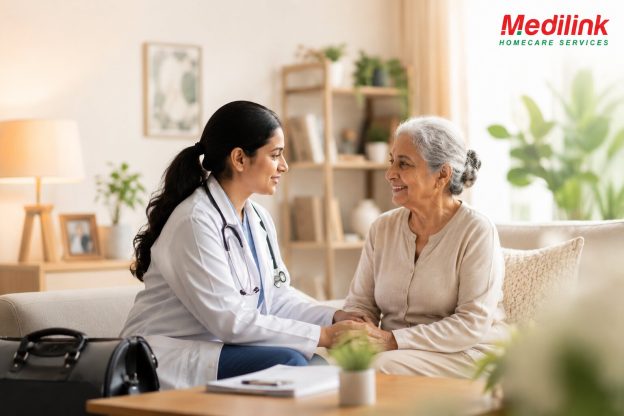
Doctor Visit at Home

How to Request for a Doctor to Do Regular Home Visits

Content Summary

This blog explains how families can request regular doctor home visits for elderly patients, recovering individuals, and people living with chronic illnesses. It discusses when home consultations become necessary, how the process works, common mistakes families should avoid, and why personalised home healthcare is becoming increasingly important. The article also highlights the growing demand for Doctor consultation in Joka and explains how Medilink Healthcare provides reliable doctor home visit services in Joka and nearby areas.

There was a time when doctor home visits were considered normal in many Indian households. Family doctors knew the patient personally, understood the family history, and visited homes whenever someone elderly or seriously ill could not travel easily. Over time, healthcare became more hospital and clinic focused, and regular home visits slowly became less common.

But in recent years, things have started changing again.

Today, many families are once again searching for reliable doctor home visit services, especially for elderly parents, recovering patients, and individuals dealing with long-term illnesses. The reason is simple — not every patient is physically comfortable travelling repeatedly to hospitals or clinics.

For some people, even a short journey can become exhausting.

Families often realise this problem after multiple hospital visits. The patient becomes tired, waiting times become stressful, and regular follow-ups start feeling physically and mentally draining. This is where regular doctor home visits become extremely helpful.

Why More Families Are Choosing Doctor Home Visits

Healthcare is not only about medicines and prescriptions. Comfort, emotional stability, and proper monitoring also play an important role in recovery and long-term wellbeing.

When a patient receives medical attention at home, the environment itself feels calmer. Elderly patients especially tend to feel more relaxed inside familiar surroundings instead of crowded hospital waiting rooms.

In many cases, family members also get more time to discuss concerns with the doctor properly.

This becomes important because elderly patients often have multiple health conditions at the same time. A quick clinic consultation may not always allow enough discussion about appetite changes, weakness, sleep problems, mobility issues, or behavioural changes.

During home visits, doctors can observe the patient more naturally. They can understand:

  • How the patient is living
  • Whether movement inside the house is safe
  • If medications are being followed properly
  • How caregivers are managing daily support
  • Whether recovery is improving or declining

These small observations often help doctors make better decisions regarding treatment and patient care.

Situations Where Regular Home Visits Become Necessary

Not every patient requires a doctor at home regularly. But there are certain medical and practical situations where home consultations become highly beneficial.

Elderly Patients with Mobility Problems

One of the most common reasons families request doctor home visits is mobility difficulty. Many senior citizens suffer from arthritis, balance problems, joint pain, or weakness that makes travelling difficult.

Even getting into a vehicle can become painful for some elderly patients.

Repeated hospital travel in such conditions often increases physical stress instead of helping recovery.

Patients Recovering After Hospitalisation

After surgeries or serious illnesses, many patients need follow-up monitoring but are not physically strong enough for repeated clinic visits.

Patients recovering from:

  • Fractures
  • Stroke
  • Surgery
  • Respiratory infections
  • Severe weakness

often recover more comfortably with home-based medical monitoring.

Chronic Illness Monitoring

Patients living with diabetes, blood pressure problems, COPD, neurological conditions, or kidney-related diseases usually require continuous observation over long periods.

Regular home visits help doctors monitor changes gradually instead of waiting for conditions to worsen suddenly.

Elderly People Living Alone

In Kolkata, many senior citizens now live alone because children work in other cities or outside India. Families often worry about how their parents are managing medications, eating habits, or sudden health complications.

Regular doctor visits at home provide reassurance both for the elderly person and the family members staying far away.

How to Properly Request a Doctor for Home Visits

Many families feel unsure about how to arrange regular doctor consultations at home. In reality, the process is usually quite simple if handled properly.

The first step is explaining the patient’s condition clearly.

Families should provide proper details regarding:

  • Age of the patient
  • Existing medical conditions
  • Mobility limitations
  • Current medications
  • Recent hospitalisation history
  • Emergency history if any

This information helps healthcare providers understand the level of care required.

It is also important to discuss how frequently the patient may need monitoring. Some patients require weekly visits, while others may only need monthly follow-ups.

The frequency should always depend on the patient’s medical condition rather than convenience alone.

The Importance of Consistency in Home Healthcare

One thing many families overlook is consistency.

A single doctor visit may help temporarily, but regular monitoring creates a much clearer understanding of the patient’s long-term health condition.

For example, doctors can gradually notice:

  • Changes in breathing patterns
  • Weight loss or weakness
  • Medication side effects
  • Reduced mobility
  • Mental confusion
  • Sleep disturbances

These signs are often missed when patients visit clinics only during emergencies.

Regular monitoring also helps in adjusting medications at the right time before complications become serious.

Why Behaviour and Communication Matter So Much

Families usually focus on qualifications while selecting healthcare services, which is obviously important. But behaviour and communication are equally important in home healthcare.

Patients, especially elderly individuals, often become emotionally dependent on familiar medical support.

A doctor who communicates patiently can make patients feel emotionally secure. In many homes, elderly people feel anxious about their health but hesitate to express concerns openly during rushed clinic consultations.

Home visits create a more comfortable environment for proper discussion.

Family members also get opportunities to ask practical caregiving questions about:

  • Food habits
  • Medication timing
  • Sleep issues
  • Weakness
  • Physiotherapy support
  • Emergency warning signs

Good communication often improves patient confidence and treatment cooperation significantly.

Common Mistakes Families Should Avoid

While arranging home healthcare support, some families make decisions too quickly without evaluating service quality properly.

Choosing healthcare support only based on lower cost can sometimes create problems later. Medical reliability, professionalism, response time, and patient safety should always come first.

Families should also avoid delaying emergency treatment assuming home visits alone are enough for critical situations.

Home healthcare is excellent for monitoring and ongoing support, but severe emergencies may still require immediate hospitalisation.

Another common mistake is poor medical record management.

Maintaining proper records of:

  • Prescriptions
  • Test reports
  • Blood pressure readings
  • Sugar monitoring
  • Previous hospital discharge papers

helps doctors understand the patient’s condition much more accurately during each visit.

Growing Demand for Doctor Consultation at Home

The demand for home healthcare services has increased rapidly across Kolkata over the last few years.

Families are becoming more aware of the benefits of personalised healthcare support at home. Elderly care needs are increasing, and many working professionals cannot physically accompany parents to hospitals regularly due to work schedules or living outside the city.

This has naturally increased the demand for Doctor consultation in Joka and nearby areas where families are searching for reliable medical support that is both professional and accessible.

People now prefer healthcare systems that reduce stress for both patients and caregivers.

Choosing a Reliable Home Healthcare Provider

Before selecting any healthcare service, families should evaluate the provider carefully.

A trustworthy healthcare provider should offer:

  • Qualified and experienced doctors
  • Professional communication
  • Timely response
  • Proper patient coordination
  • Transparent consultation processes
  • Reliable scheduling support

Trust becomes extremely important because home healthcare involves allowing medical professionals directly into the patient’s personal environment.

Families should feel confident not only about the doctor’s expertise but also about the overall professionalism of the service.

Final Thoughts

Regular doctor home visits are no longer considered temporary arrangements only for critically ill patients. They have now become an important healthcare solution for elderly individuals, recovering patients, and families looking for more personalised medical care.

The biggest advantage of home consultations is comfort. Patients feel safer, calmer, and more relaxed inside their own homes. Doctors also get a better understanding of the patient’s actual living condition, which often helps in providing more practical and patient-focused treatment guidance.

For families searching for Doctor consultation in Joka, reliable and compassionate home healthcare support can make a major difference in long-term patient wellbeing.

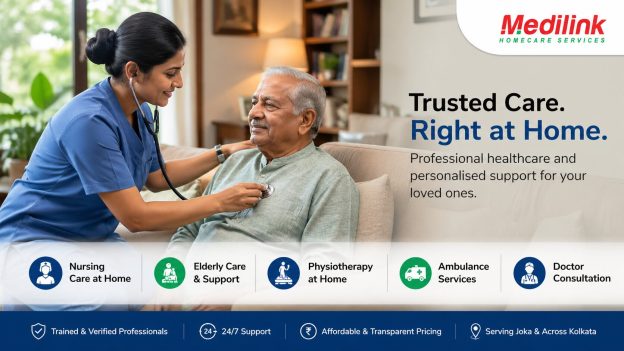
Medilink Healthcare provides doctor home visit services in Joka and nearby areas for elderly patients, recovering individuals, and families who require dependable medical support at home with personalised attention and professional care.

FAQ

1. Who should consider regular doctor home visits?

Regular doctor home visits are helpful for elderly patients, bedridden individuals, post-surgery patients, and people managing chronic illnesses who find travelling difficult.

2. How can I arrange a doctor home visit?

You can contact a home healthcare provider, explain the patient’s condition, share medical history, and discuss how frequently medical monitoring may be needed.

3. Are home doctor visits suitable for elderly patients?

Yes. Home visits reduce travel stress, long waiting times, and physical discomfort for senior citizens.

4. What information should families keep ready before a doctor visit?

Families should maintain prescriptions, previous reports, medication lists, and recent health updates for proper medical evaluation.

5. Can regular doctor home visits reduce hospital visits?

In many cases, yes. Regular monitoring helps detect health issues early and may reduce unnecessary hospital trips for routine follow-ups.

6. Is Doctor consultation in Joka available for homecare patients?

Yes. Many healthcare providers now offer Doctor consultation in Joka and nearby areas for elderly care and patient monitoring at home.

Author: Medilink Healthcare Editorial Team

The Medilink Healthcare editorial team creates practical healthcare content focused on elderly care, patient wellbeing, home healthcare services, and medical support solutions. Our articles are written to help families understand healthcare decisions more clearly through experience-driven and patient-focused information.
Elder Care at Home

Elder Care at Home: How Important Is It Today?

Content Summary

Elder care at home is becoming essential due to the growing elderly population and changing family structures. It provides personalized support, improves health outcomes, and ensures emotional well-being. Services like Elderly Care Service and Geriatric Support at Home in Kolkata help families manage care effectively while allowing elderly individuals to live safely and comfortably at home.

Changing Family Life and the Growing Need for Care

Caring for elderly family members has always been deeply rooted in our culture, but the way this care is delivered is slowly changing. In earlier times, joint families made it easier to look after aging parents because someone was always present at home. Today, with nuclear families becoming more common and work responsibilities increasing, continuous care is not always possible. At the same time, people are living longer, often with age-related health conditions that require regular attention. This combination of longer life and changing family structures has made elder care at home not just helpful, but increasingly necessary for many families.

Rising Elderly Population and Care Demand

India is going through a significant demographic shift. The elderly population is growing steadily and is expected to form a large portion of society in the coming decades. This increase is not just about numbers—it reflects a growing need for structured and reliable care systems. Many elderly individuals today live alone or spend long hours without supervision, especially in urban areas where family members may be working or living in different cities. This creates a clear gap between the care that is needed and what families can manage on their own.

What Elder Care at Home Really Means

Elder care at home helps bridge this gap by bringing professional support directly into the individual’s living environment. Unlike hospitals or care facilities, where routines are fixed and unfamiliar, home-based care adapts to the person’s lifestyle. It allows elderly individuals to stay in a place they understand and feel comfortable in, surrounded by familiar objects and routines. This sense of familiarity plays an important role in reducing stress and improving overall well-being, especially for those dealing with mobility challenges or chronic illnesses.

Beyond Medical Care: Daily Support and Companionship

Home care is not limited to medical assistance. While monitoring health conditions and managing medications are important, the scope of care is much broader. It includes helping with everyday activities such as bathing, dressing, eating, and moving safely. It also involves ensuring proper hygiene and nutrition. Just as important is companionship. Many elderly individuals experience loneliness, which can affect both mental and physical health. Having someone present for conversation and support can make daily life more comfortable and emotionally stable.

Maintaining Independence with Safety

One of the biggest advantages of elder care at home is that it allows individuals to maintain independence while staying safe. Instead of moving to a new environment, they can continue their daily routines with the support they need. They can eat familiar food, follow their preferred schedule, and remain connected to their surroundings. This balance between independence and assistance helps maintain dignity and confidence, which are essential for healthy aging.

Health Benefits of Receiving Care at Home

From a healthcare perspective, home-based care offers several practical benefits. It allows for more personalized attention and early identification of health issues. Small changes in health can be noticed quickly and managed before they become serious. Many studies also suggest that elderly individuals receiving care at home often experience better recovery outcomes and fewer hospital visits. Staying in a comfortable environment also reduces stress, which supports both physical and mental health.

Reducing Family Stress and Responsibility

Caring for an elderly family member can be physically and emotionally demanding, especially for working individuals. Managing daily care along with personal and professional responsibilities often leads to stress and fatigue. Home care services provide support that reduces this burden. Families can remain involved in the caregiving process without being overwhelmed, and they can focus more on spending quality time rather than managing every detail of care.

Signs That Indicate the Need for Home Care

There are certain situations where considering elder care at home becomes important. These signs should not be ignored, as early support can prevent complications and improve quality of life.

  • Difficulty in walking or frequent risk of falls
  • Trouble managing daily activities independently
  • Ongoing health conditions requiring regular monitoring
  • Memory issues or confusion
  • Long hours spent alone without supervision

Recognizing these signs early helps families make timely and informed decisions.

Growing Demand for Elder Care Services in Kolkata

Urban cities like Kolkata are seeing a steady rise in the demand for organized home care services. Changing lifestyles, increased awareness, and the need for reliable support systems are driving this growth. Families are now looking for solutions that provide consistent care without disrupting the comfort of home. This has led to the rise of services like Elderly Care Service and Geriatric Support at Home in Kolkata, which combine professional medical assistance with daily support and emotional care in a structured way.

Choosing the Right Care Provider Matters

Selecting the right service provider is a crucial step in ensuring quality care. It is important to look beyond basic services and focus on reliability and approach. A good provider ensures proper training, supervision, and communication. Key factors to consider include:

  • Availability of trained and verified caregivers
  • Regular monitoring and supervision
  • Transparent communication with family members
  • Personalized care plans based on individual needs

These elements help ensure that care is safe, consistent, and respectful.

How Medilink Healthcare Services Supports Families

In this growing need for structured care, Medilink Healthcare Services works to provide dependable home-based solutions. The focus is on understanding individual requirements and delivering care that fits naturally into daily life. By combining trained caregivers with a personalized approach, the service aims to support both medical needs and emotional well-being. This allows elderly individuals to live comfortably at home while giving families confidence that proper care is being provided.

Why Elder Care at Home Is Becoming Essential

Elder care at home is no longer just an option—it is becoming an essential part of modern living. As families continue to balance changing lifestyles with traditional responsibilities, home-based care offers a practical and respectful solution. It supports independence, ensures safety, and improves overall quality of life. Most importantly, it allows care to happen in a place that feels natural and comforting—the home.

 FAQs

1. What is elder care at home?

It is a service that provides medical and daily support to elderly individuals in their own home.

2. Why is home care important?

It ensures comfort, independence, and better physical and emotional health.

3. When should I consider it?

When daily tasks, mobility, or health conditions become difficult to manage alone.

4. Does it include emotional support?

Yes, companionship and mental well-being are key parts of home care.

5. Are services available in Kolkata?

Yes, there are professional services offering structured elderly care at home.

6. How do I choose the right provider?

Look for trained caregivers, proper supervision, and personalized care plans.

About the Author
This article is written by the content team at Medilink Healthcare Services, focusing on simple, research-based healthcare information. The team aims to help families understand elderly care needs and make informed decisions about home healthcare solutions.

care at home

Families in Kolkata Are Choosing Care at Home Instead of Longer Hospital Stays

In Kolkata, healthcare decisions are slowly changing. For years, most families followed a fixed approach—if someone fell seriously ill, they were admitted to a hospital and stayed there until recovery. It felt like the safest option, and in many cases, it still is.

But over time, especially after recent years, people have started to question whether every stage of recovery really needs to happen inside a hospital. In areas like Joka, Thakurpukur, and Behala, this thought is becoming more common, not because people are avoiding hospitals, but because they are trying to find a more practical balance.

What many families are realizing is that treatment and recovery are not always the same thing. Hospital care is essential during critical stages, but once the situation stabilizes, the need often shifts toward monitoring, support, and consistency. This is where the role of home healthcare services in Kolkata has started to become more visible in everyday conversations.

This change did not happen overnight. It came from experience. During the pandemic, when hospital beds were limited and movement was restricted, families had no option but to manage care at home. Guidelines from organizations like the World Health Organization and India’s National Health Authority supported monitored home care in specific cases. That period made people more aware of what could actually be managed outside hospital walls.

Looking at the Reality of Hospital Stays

Anyone who has managed a hospital stay in Kolkata understands how demanding it can be. The cost increases quickly, especially if the stay extends beyond a few days. Along with that, there is the constant activity, shared attention, and the challenge of coordinating everything around the patient.

For elderly individuals, the situation becomes more complicated. Being in an unfamiliar place for a long time often leads to discomfort or restlessness. Medical observations available through the National Center for Biotechnology Information also suggest that recovery is influenced not just by treatment, but by environment and mental comfort.

A Situation Many Families in Joka Understand

A family in Joka recently went through a situation that reflects what many others are experiencing. An elderly member had undergone a procedure and was discharged with instructions for careful monitoring, medication, and daily assistance.

At first, the family thought about extending the hospital stay, just to be on the safe side. But the environment was not comfortable for the patient, and the cost was becoming difficult to manage. They eventually decided to continue care at home with structured support.

Within a short time, the difference became clear. Daily routines were better managed, medication was given on time, and the patient felt more relaxed. The family, too, found it easier to handle their responsibilities without constant disruption.

This is not an isolated experience. Similar situations are becoming increasingly common across South Kolkata.

Why the Shift Feels Practical

The growing preference for home-based care is not based on emotion alone. It is a response to real challenges that families face every day. Managing work, travel, and patient care together is not easy, especially in a busy city.

At home, care becomes more consistent. The patient is in a familiar space, and support can be arranged in a way that fits the family’s routine. Instead of adjusting everything around hospital schedules, care adapts to daily life.

This balance is what many families are looking for.

Recovery Beyond Medical Treatment

Recovery is often seen only as a medical process, but there is more to it. Emotional comfort, routine, and familiarity all play a role in how a patient responds over time.

When patients are at home, they are surrounded by known environments and people they trust. This reduces stress and helps maintain a sense of normalcy. For elderly patients in particular, this can make a noticeable difference in how they recover.

It does not replace medical care, but it supports it in a way that hospitals cannot always provide.

A Gradual Change Across Kolkata

Across Kolkata, especially in areas like Joka and Thakurpukur, this shift is becoming more visible. Families are not moving away from hospitals, but they are using them differently. Critical treatment still happens there, but recovery is increasingly being managed at home.

This approach is more flexible and often more aligned with real-life needs. As awareness grows, more people are becoming open to this idea.

Final Thoughts

Healthcare is slowly adapting to the way people live today. It is no longer limited to one place or one approach.

For many families in Kolkata, especially in Joka and nearby areas, continuing care at home is becoming a practical decision rather than an uncertain one. It allows them to manage both health and daily life in a more balanced way.

As this shift continues, the importance of reliable home healthcare services in Kolkata will only increase. Choosing the right support system becomes an important part of that process.

Among the providers working in this space, Medilink Healthcare Services is one of the names supporting families with structured home care and healthcare services across South Kolkata.