 7450012800 / 033 24532800
 7450022800 / 7450062800
 medilink24x7@gmail.com
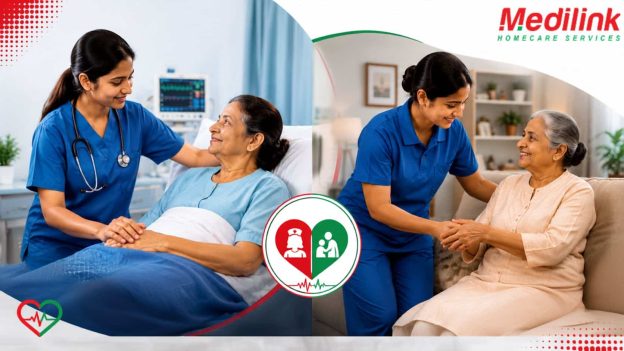
A family calls asking for “someone to help Mother at home,” and it usually takes a few more questions before we understand what they actually need. Sometimes it’s company and help with daily routines. Other times, it’s wound dressing after surgery, injections on a schedule, or monitoring vitals that could change quickly. These are not the same job, and confusing them is one of the most common — and costly — mistakes families make when arranging home care for the first time.
The Real Difference
A caregiver provides support with daily living: bathing, dressing, meals, companionship, light mobility assistance. It’s essential work, and it makes a genuine difference to comfort and safety. But a caregiver is not trained or licensed to perform clinical procedures.
A nurse — a GNM or ANM in the Indian home care context — is trained and qualified to handle medical tasks: wound dressing and infection monitoring, IV administration, injections, catheter and tracheostomy care, tube feeding, and tracking vital signs closely enough to catch a problem before it becomes an emergency. When a discharge summary mentions any of these, what’s needed is a nurse, not a caregiver, however capable that caregiver might otherwise be.
The line matters because a caregiver put in a nurse’s position — asked to change a dressing or manage medication timing for a complex condition — is being placed in a position they’re not trained for, and that puts the patient at real risk.
When a Family Actually Needs a Nurse
A few situations make the need for skilled nursing fairly clear-cut:
Right after surgery. Wound care, drain management, and pain monitoring in the days following an operation need clinical judgment, not just attentiveness. This is where post-surgery care becomes essential.
Managing a chronic condition that requires medical tasks. Diabetics needing insulin administration, patients with catheters, or anyone on a complex medication schedule benefit from a nurse who understands the clinical reasoning behind the care plan, not just the checklist.
Post-hospitalization recovery. The period right after a hospital discharge is when complications are most likely to surface. Effective home nursing during this window is associated with meaningfully lower hospital readmission rates — the Ministry of Health & Family Welfare has pointed to reductions of close to 30% when structured home nursing care follows a hospital stay.
Any patient with a tracheostomy, feeding tube, or ongoing wound care needs. These require someone trained to recognize early signs of infection or complication, not just someone comfortable assisting with daily routines.
If none of these apply — an elderly parent simply needs company, help getting around, and support with daily tasks — a caregiver is usually the right, and more affordable, choice.
What This Means for Cost and Planning
Skilled nursing costs more than general caregiving, and that’s appropriate given the training and responsibility involved. Families sometimes try to save on this by hiring a caregiver for a nursing-level need, which usually backfires — either the caregiver isn’t equipped to handle a complication when it arises, or the family ends up bringing in a nurse anyway after something goes wrong, at a more difficult and more expensive moment than if it had been planned from the start.
The better approach is matching the level of care to what the discharge summary or treating doctor actually specifies, rather than guessing based on what feels affordable. A short conversation with a home care provider about the specific medical tasks involved is usually enough to get this right from day one.
Questions Worth Asking Before You Hire
Whether you’re arranging a nurse or a caregiver, a few questions separate a well-run home care arrangement from a risky one:
- What are the nurse’s or caregiver’s actual qualifications, and are they verified?
- Who supervises the care plan — is there a senior nurse or doctor a family can reach if something changes?
- How are shift handovers documented, so nothing gets missed between one caregiver or nurse and the next?
- What’s the protocol if a nurse notices something concerning — is there a clear escalation path to a doctor?
A provider that answers these clearly and without hesitation is usually one that takes the clinical side of home care seriously.
Getting the Match Right
The single most useful thing a family can do early on is have an honest conversation about what kind of support is actually needed — medical or personal — rather than assuming one term covers both. Getting this right from the start means the person at home is actually equipped for what the recovery or condition requires, and the family isn’t caught adjusting mid-crisis.
If you’re trying to work out whether your situation calls for a nurse or a caregiver, our team can talk through the specifics of the condition or recovery involved and help match the right level of support — through nursing care, or through complementary support like post-surgery care, post-hospitalization home care, and respite support for family caregivers, depending on what’s needed.
Written by the Medilink Healthcare Services care team, who coordinate nursing and caregiver placements for families across Joka and South Kolkata every day.